La French Tech Taiwan Newsletter #5
Recognition, Global Connections & Ecosystem Growth
This edition highlights an important moment for the French Tech Taiwan ecosystem, with stronger international recognition, clearer organization, and growing links between the French and Taiwanese innovation ecosystems.
From French Tech Taiwan’s selection as part of the French Tech Capitals and Communities 2026-2028 network, to the announcement of theFrench Tech Next40/120 – 2026 cohort, and the visit of leading French DeepTech companies and the Grand Paris delegation to Taipei, the past weeks have shown how France and Taiwan are working more closely together in key areas such as semiconductors, quantum technologies, advanced electronics, energy, and digital infrastructure.
Beyond these institutional and international milestones, you will find coverage of FTT in Kaohsiung, Computex / InnoVEX, and accessibility-focused events, each illustrating different dimensions of our community’s engagement in Taiwan’s innovation landscape.
COMPUTEX / InnoVEX 2026 — Momentum for France–Taiwan Innovation Links
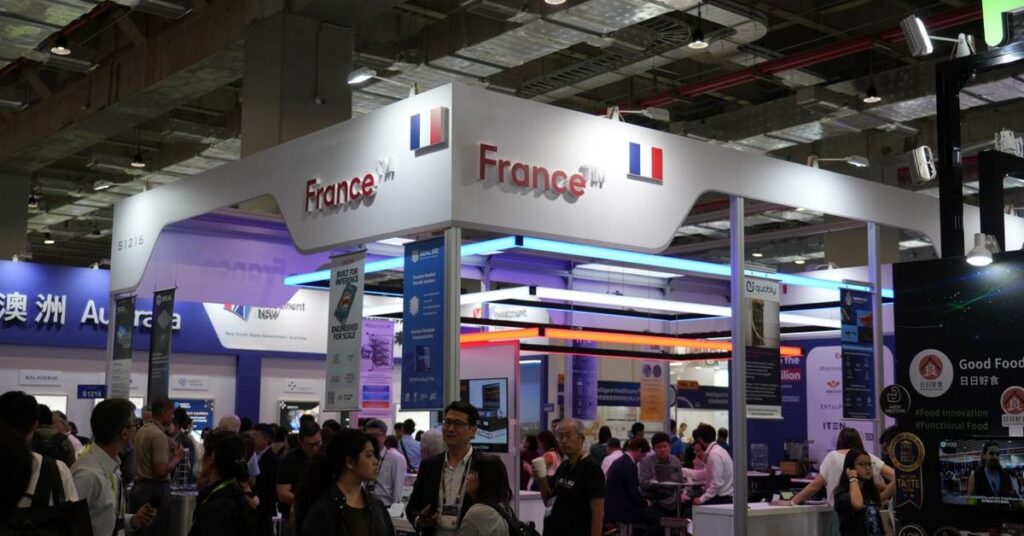
This year also marked a major milestone for France–Taiwan cooperation, as the largest French delegation ever organized at COMPUTEX and InnoVEX, coordinated by Business France Taiwan, gathered startups, corporates, investors, and institutional actors across the full deeptech and advanced computing value chain. Over the course of the week, the delegation engaged in a dense sequence of keynotes, panels, startup showcases, and ecosystem meetings, reflecting ten years of structured collaboration between the two innovation ecosystems.
Paris Region Keynote & Panel — Defining the AI Infrastructure Era
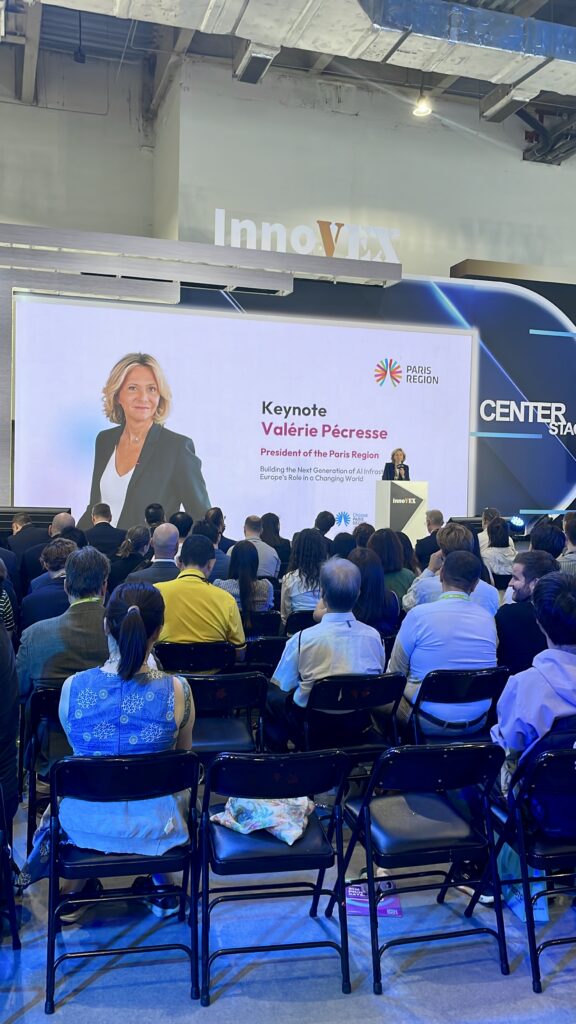
A central highlight of the week was the Paris Region session at COMPUTEX / InnoVEX 2026, which underscored a structural shift: AI is entering the age of infrastructure. In her keynote, Valérie Pécresse – President of the Paris Region, emphasized that AI no longer depends only on models and applications, but on a full chain of critical infrastructure: computing power, semiconductors, HPC, data centers, secure supply chains, decarbonized energy and technological sovereignty.
Against a geopolitical backdrop where advanced chip production remains highly concentrated, Valerie Pecresse stressed that Europe does not intend to simply copy the American or Asian models. Instead, Europe aims to build a different path — one based on sustainability, energy efficiency, the rule of law, strategic autonomy and balanced international partnerships.
The Paris Region was presented as a central pillar of this European ambition. The region brings together a unique ecosystem of talent, research, industry and innovation, including Paris-Saclay, numerous AI research labs, hundreds of AI startups, R&D centers from major international corporations, and one of Europe’s leading quantum ecosystems. The keynote also underlined the importance of private investment in AI infrastructure, as well as the role of decarbonized electricity in Europe’s competitiveness.
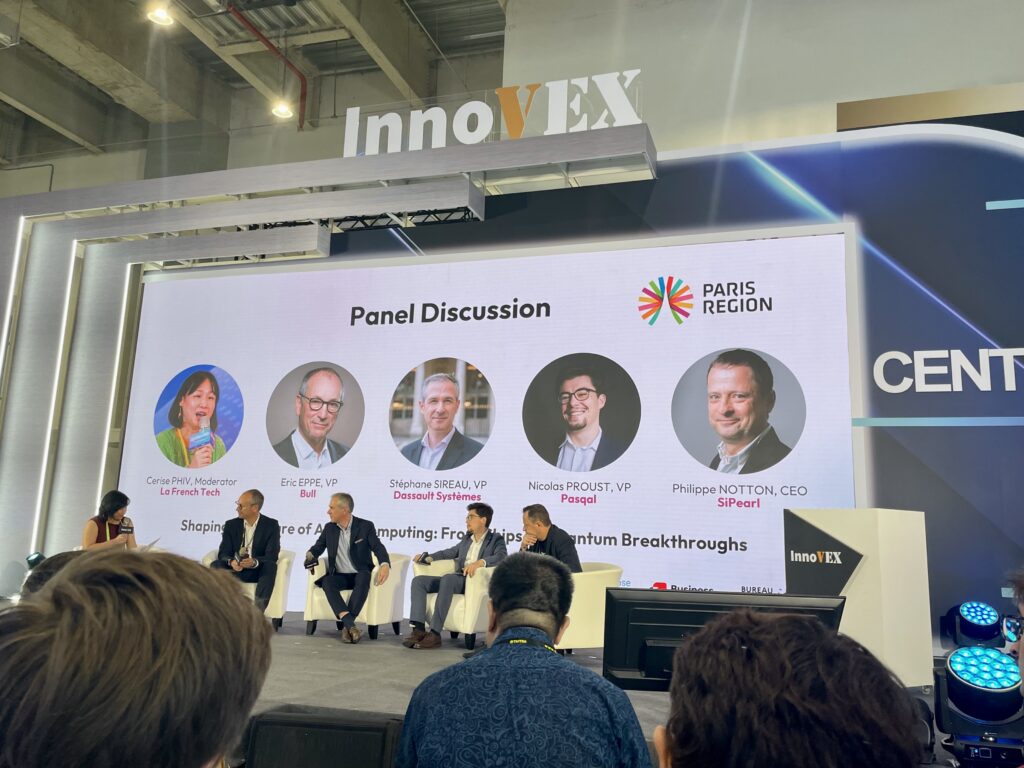
The panel “Shaping the Future of AI and Computing: From Chips to Quantum Breakthroughs,” then illustrated this value chain through four major French companies.
Dassault Systèmes opened the discussion by focusing on industrial AI, simulation and virtual twins, and how these technologies are transforming the way products are designed, tested and manufactured. SiPearl addressed the need for sovereign processors and the growing computing power required by AI and HPC. Bull brought the large-scale infrastructure perspective, with a focus on energy efficiency and the industrial deployment of AI computing capacity. Finally, PASQAL offered a forward-looking view on the role of quantum computing as a future complement to AI and HPC infrastructure.
The session also highlighted several major cooperation and investment announcements between France, Europe and Taiwan.
- Dassault Systèmes and NVIDIA announced a strategic partnership around industrial AI architectures for virtual twins.
- Bull and Foxconn announced an investment of more than €120 million in France to develop AI-related production infrastructure.
- SiPearl also illustrates the complementarity between France and Taiwan, with processors designed in Europe and produced by TSMC in Taiwan.
- In quantum computing, PASQAL embodies French and European excellence, with an approach increasingly connected to HPC, cloud and AI environments.
Overall, the session showed that France has strong assets across the entire AI and advanced computing value chain: industrial software, processors, HPC infrastructure, energy efficiency, quantum computing and deeptech. It also made clear that the future of AI infrastructure cannot be built by one country or one ecosystem alone. The complementarity between France and Taiwan — across design, research, innovation, semiconductors, hardware and industrialization — is a strategic lever for building the next generation of computing infrastructure.
Quobly Accelerates Quantum Commercialization with €115M Series A and Global Innovation Award
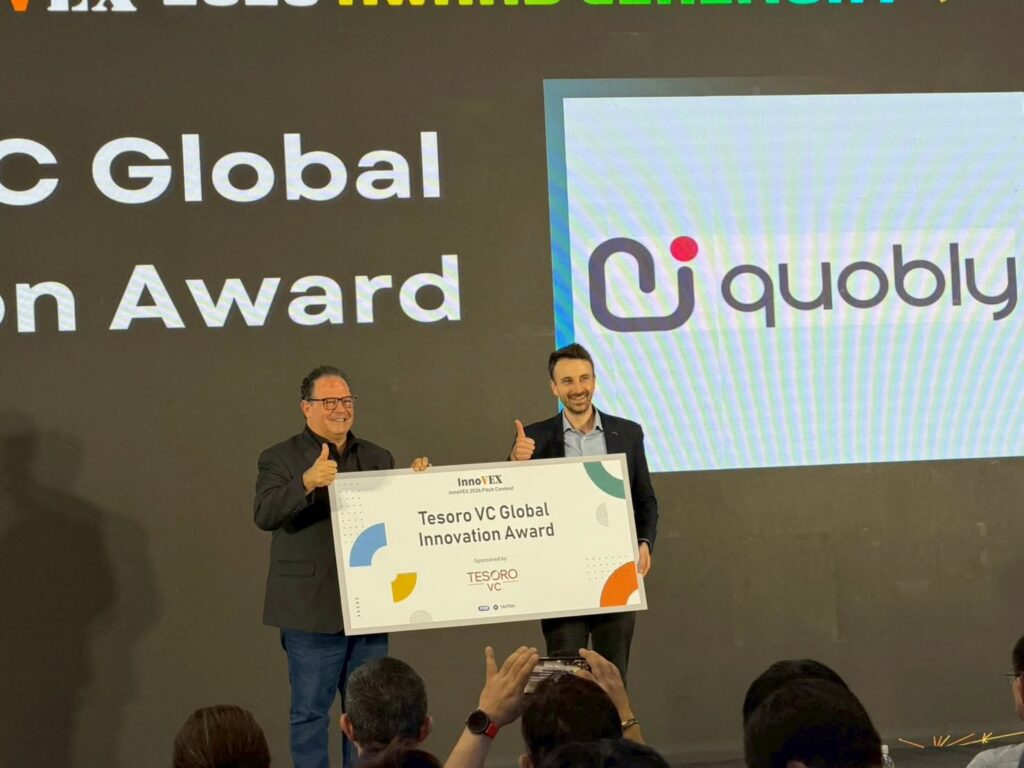
Within this broader momentum, one of the startups of the French delegation, Quobly, marked a major milestone during InnoVEX 2026 with strong commercial and technological updates.
Quobly is rapidly accelerating its mission to bring silicon-based quantum computers to the global market, propelled by a massive €115 million Series A funding round and an award at Innovex. The landmark funding round was led by premier deep-tech investors, including Bpifrance, SEALSQ, and STMicroelectronics. This massive capital injection will directly fund the industrialization of Quobly’s unique spin-qubit processors. It also supports a rapidly expanding global footprint that now counts over 100 top-tier collaborators across France, Singapore, and Canada.
This commercial momentum is backed by strong international validation. At the InnoVEX 2026 pitch contest, Quobly was honored with the prestigious Tesoro VC Global Innovation Award. The company successfully advanced through a highly competitive field of Top 15 global startups to secure the top spot. The award highlights the tech industry’s growing confidence in Quobly’s scalable architecture and its potential to democratize quantum computing.
Looking ahead, Quobly has established a clear technical roadmap targeting a late 2026 market deployment. The company’s first commercial system, named Alloy Pioneer, is scheduled to launch via the cloud by the end of 2026. Designed for early adopters in high-performance computing (HPC) centers and advanced research labs, the system features a plug-and-play architecture that integrates seamlessly into existing standard data-center infrastructures. By leveraging standard, industrial FD-SOI manufacturing technology on 300mm silicon wafers, Quobly is uniquely positioned to mass-produce reliable quantum processors using existing semiconductor fabrication facilities.
French Tech Night 2026, Closing the Week of Innovation
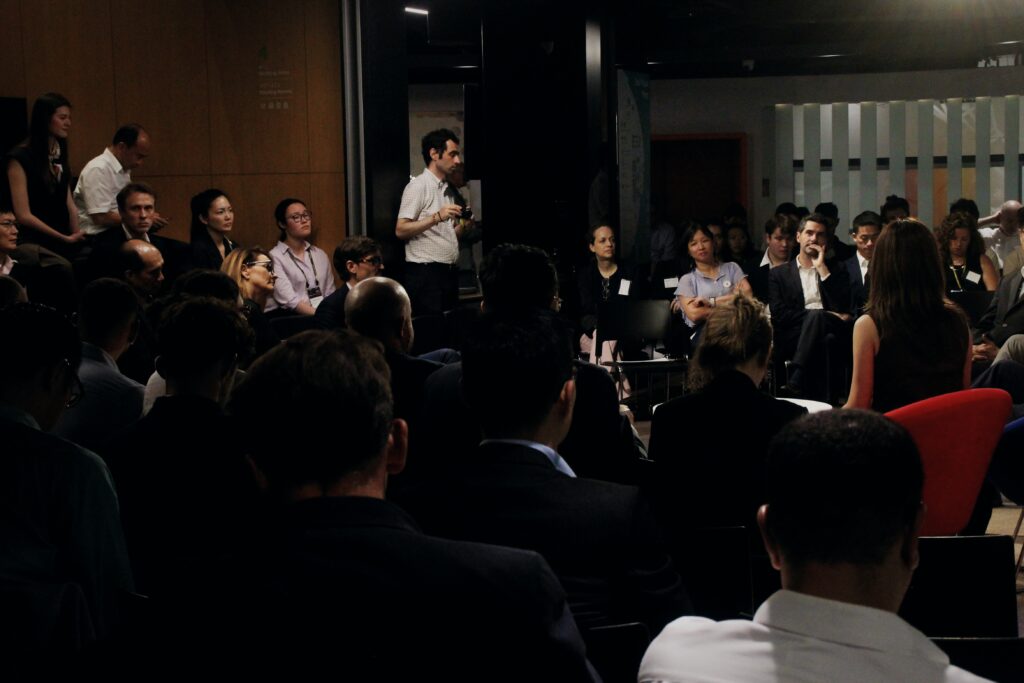
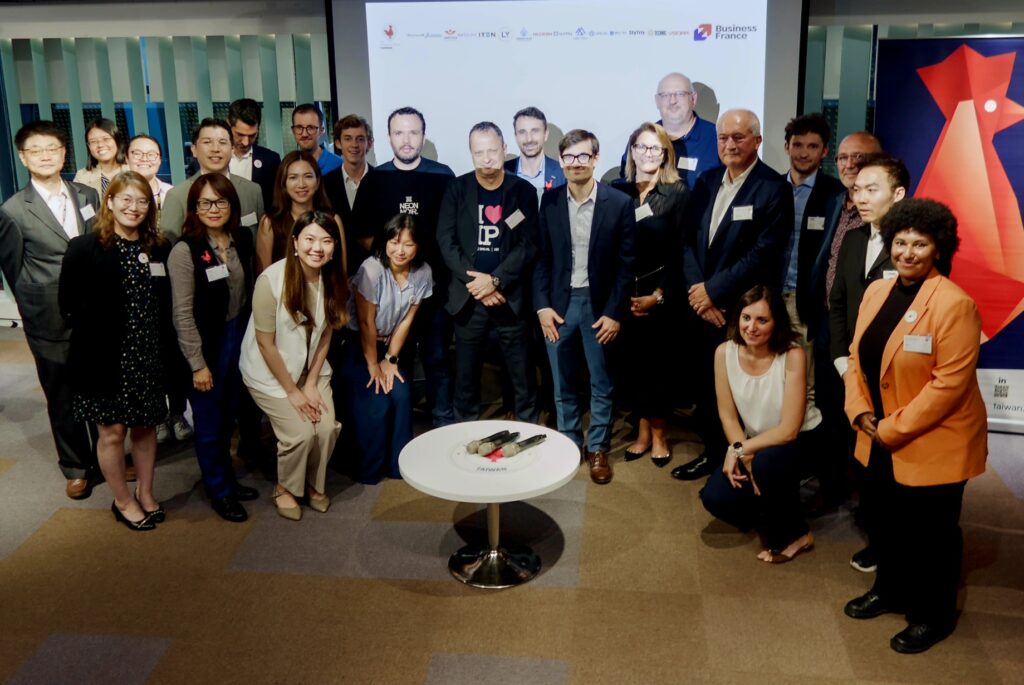
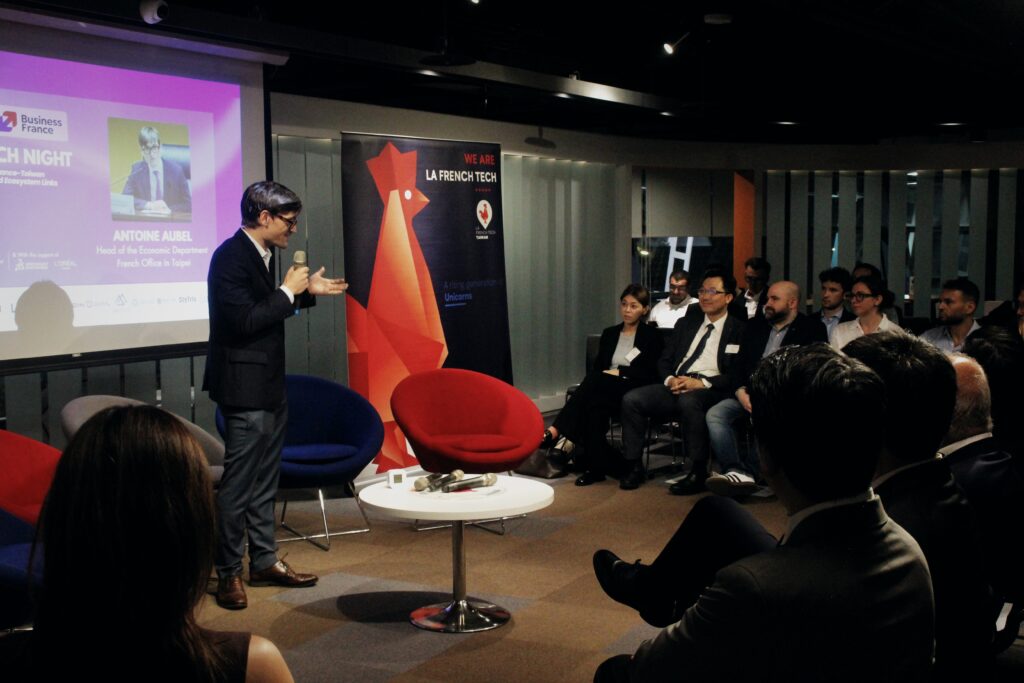
The week concluded with the annual flagship event of the ecosystem, French Tech Night 2026, hosted at Taiwan Tech Arena. This edition marked 10 years of France-Taiwan innovation cooperation, bringing together entrepreneurs, investors, corporates, startups, and institutional stakeholders in a celebration of a decade of structured collaboration.
The event highlighted how France-Taiwan cooperation is increasingly moving from exploratory exchanges toward concrete industrial partnerships and co-development initiatives across AI, semiconductors, quantum technologies, deeptech, and sustainable innovation.
We extend our sincere thanks to the French Office in Taipei, Business France Taiwan, our sponsors Dassault Systèmes and L’Oréal Taiwan, as well as all speakers, startups, partners, and participants whose contributions made this milestone edition possible.
Read our full French Tech Night 2026 brief to discover the key takeaways from the panel discussion, startup showcase, and the next chapter of France–Taiwan innovation cooperation.
La French Tech Taiwan headed south – Kaohsiung community meetup
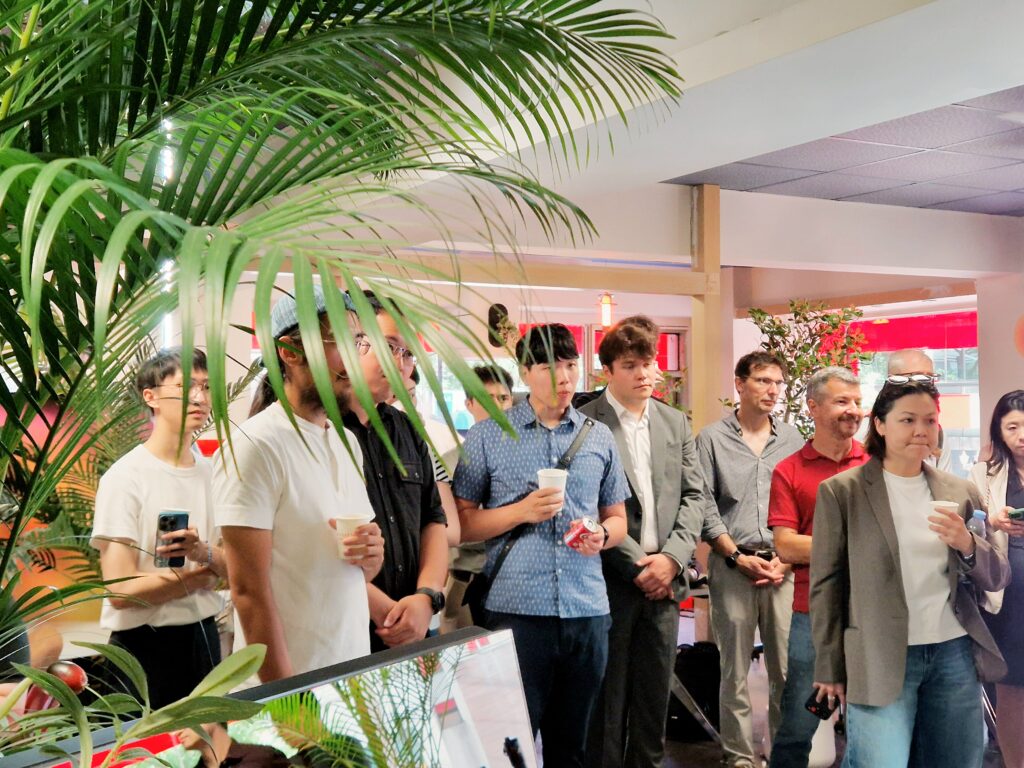
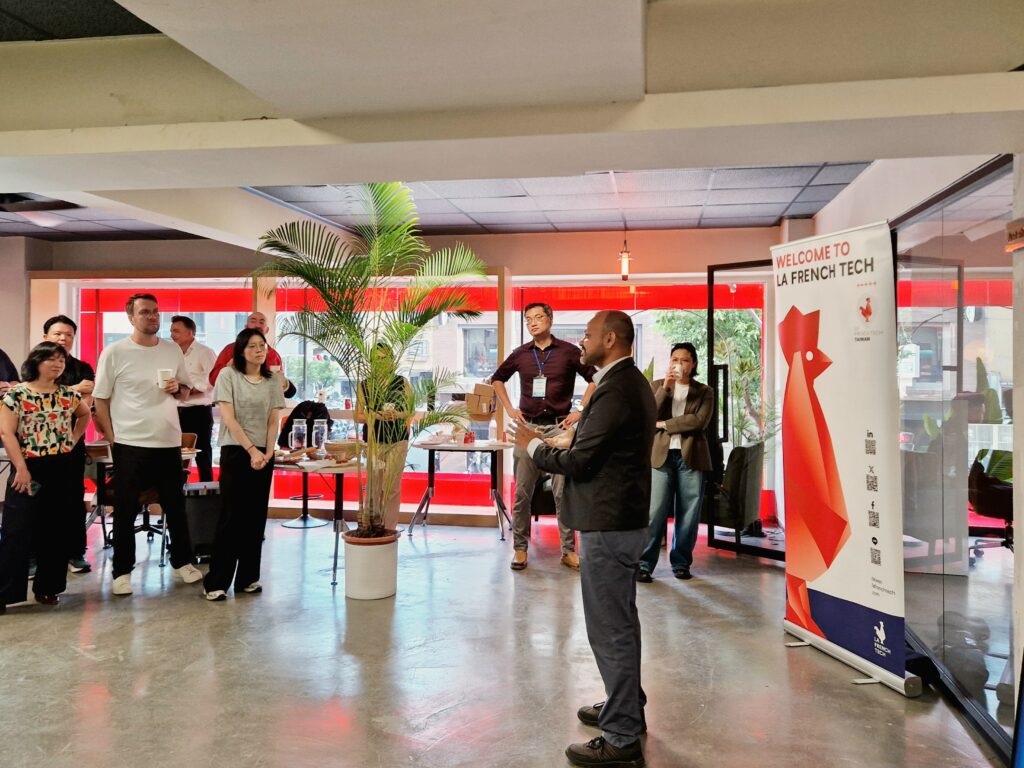
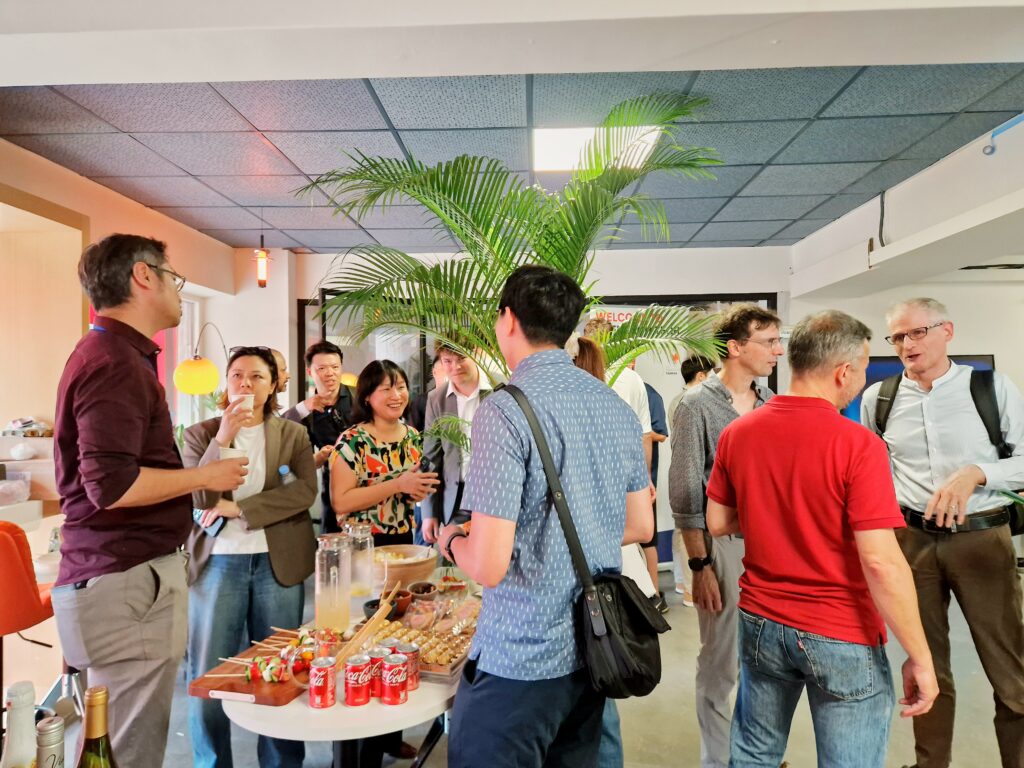
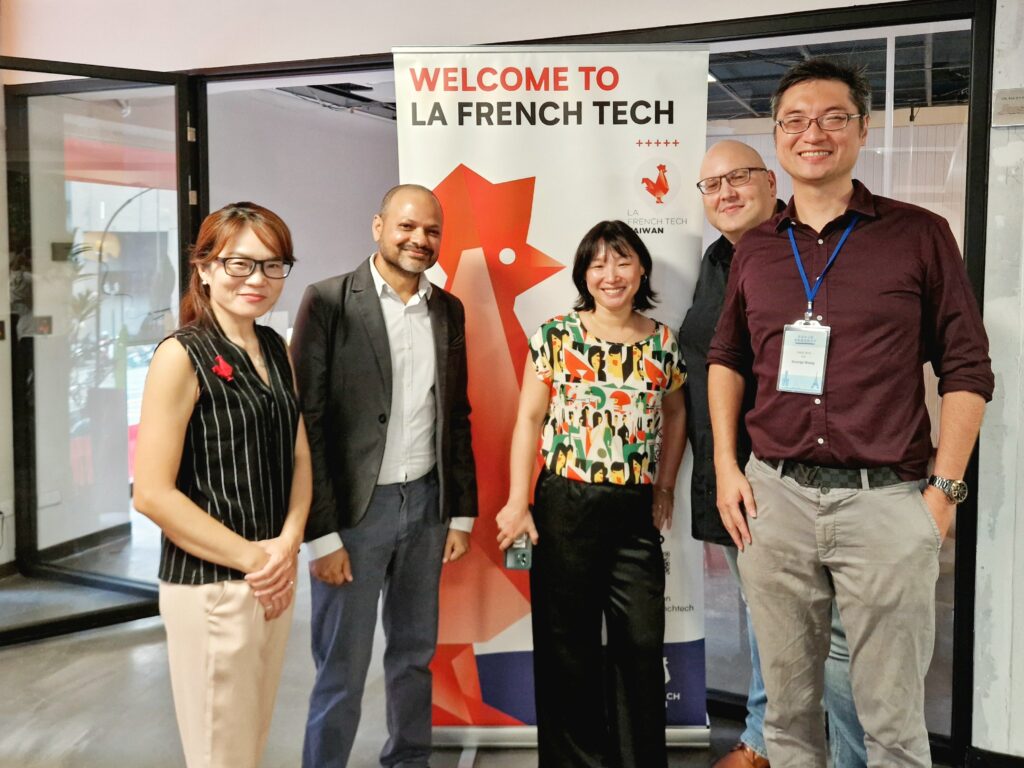
On May 22, La French Tech Taiwan hosted a community meetup in Kaohsiung at Second Space, a newly launched coworking space inaugurated the same day.
This session marked another step in our effort to strengthen connections beyond Taipei and engage more closely with Southern Taiwan’s innovation ecosystem.
The event opened with an introduction to La French Tech Taiwan by Ching-Hua Lin (DigiFashion Forum), highlighting our mission to connect and support France-Taiwan startup and innovation communities.
The programme then featured short talks on AI and energy transition, with contributions from Ravi Nataraju (THINKTANK) and George Wang (Ciel & Terre Taiwan), each sharing perspectives on AI and its application in the renewable energy sector.
“FTT meetup at Kaohsiung was interesting as the mix of entrepreneurs was diverse and AI was on everyone’s mind. The AI session on taking control was well received and did create a thought process on ownership” by Ravi Nataraju (CEO and Founder of THINKTANK).
The afternoon continued with informal networking between founders, investors, and ecosystem actors, focusing on collaboration opportunities across technology, business, and international partnerships.
This meetup took place alongside the broader Team France presence in Kaohsiung and just before the inauguration of the French Market Festival organised by the French Office in Taipei.
Digital Accessibility 101: Building Better Products for Everyone
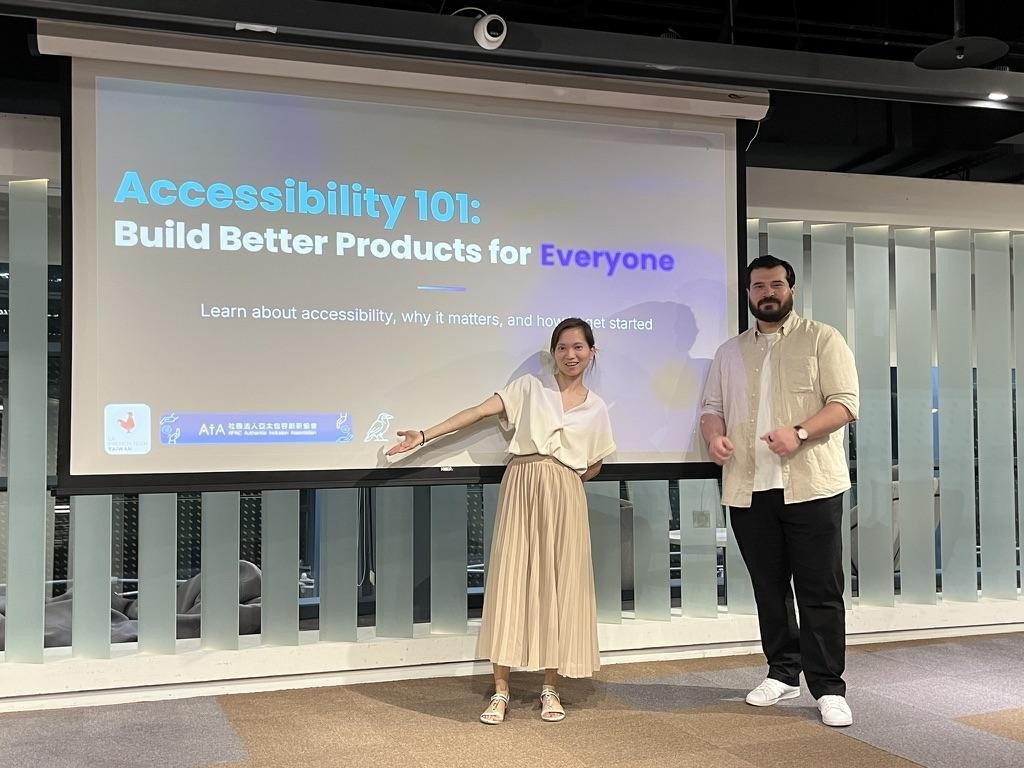
On Global Accessibility Awareness Day (GAAD), La French Tech Taiwan, APAC Authentic Inclusion Association (APAC AIA), Raven Accessibility, Tiny Oak Studio, and TechMoi came together in Taipei for Digital Accessibility 101: Build Better Products for Everyone.
The event brought together startups, entrepreneurs, designers, developers, and business owners for an informal evening of practical talks, live demos, and open conversation around one essential question:
Is your digital product truly usable by everyone?
For many teams, accessibility is still seen as a technical checklist, a legal requirement, or something to fix at the end of a project. But throughout the evening, one message became clear: accessibility is not only about compliance. It is about product quality, usability, customer trust, and business growth.
Accessibility Is a Product Issue
Digital accessibility is often misunderstood as something that only benefits a small group of users. In reality, accessibility affects people across different abilities, ages, devices, environments, and situations.
A sign-up form that cannot be completed with a keyboard, a checkout process that does not work well with assistive technology, low-contrast text that is difficult to read, or navigation that relies only on visual cues — these are not edge cases. They are product barriers.
And product barriers cost businesses real users.
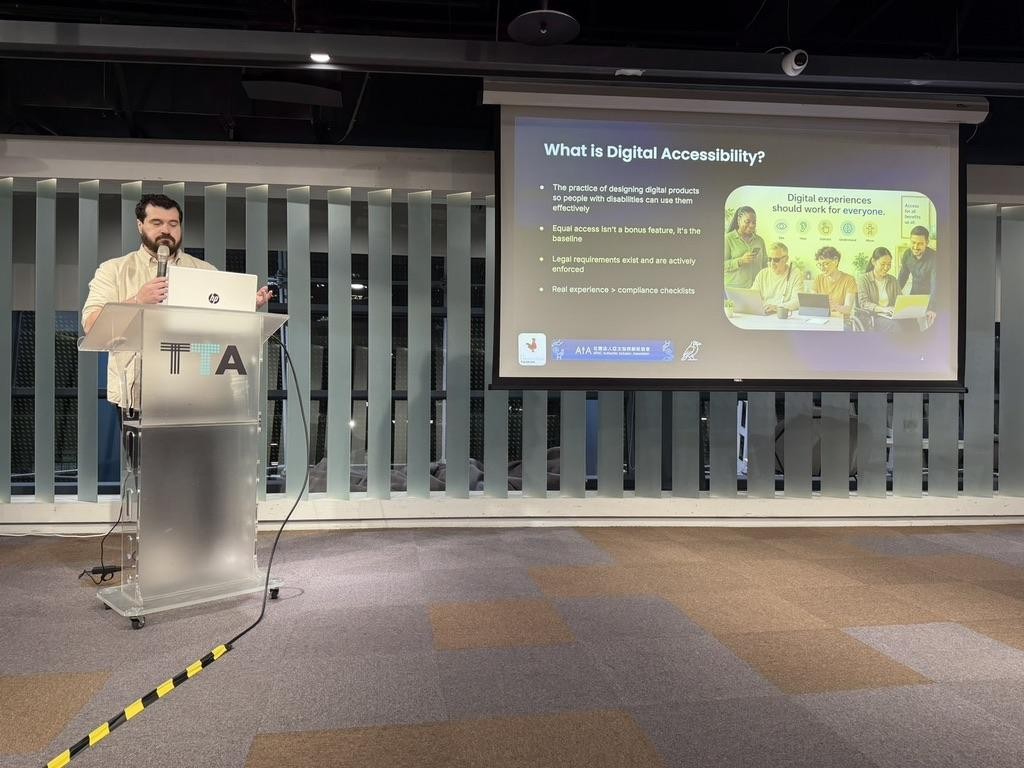
Michael Whitt, co-founder of Raven Accessibility, introduced the fundamentals of digital accessibility and demonstrated how inaccessible websites can create real friction for users. Through practical examples and live demos, participants saw how everyday design and development decisions can prevent people from completing tasks, accessing information, or becoming customers.
Better Design Starts with More Realistic Users
Christina Cheng from Tiny Oak Studio shared a design-focused perspective on how UI/UX designers can build better products for everyone.
One key takeaway was that accessibility should not be treated as a separate layer added at the end of a project. It should be considered from the beginning of the design process.
Designing for accessibility means asking better questions: Can users understand the content clearly? Can they navigate without relying only on a mouse? Are error messages easy to understand and recover from? Is the interface usable across different visual, cognitive, and motor abilities?
When designers consider accessibility early, they are not limiting creativity. They are improving clarity, usability, and resilience.
Why This Matters for Startups
For startups and growing businesses, accessibility is not only a social responsibility issue. It is a strategic product decision.
Accessible products can help teams reduce friction in key user journeys, reach a broader customer base, improve conversion, build trust, and avoid costly redesigns later.
From a La French Tech Taiwan perspective, accessibility is also part of responsible innovation and global market readiness. As more startups in Taiwan build for international users, accessibility becomes increasingly important — especially for companies looking toward Europe, where digital accessibility expectations continue to grow across e-commerce, banking, transport, consumer technology, public services, and digital platforms.
For startups, this is not about adding complexity. It is about building better products earlier.
A W3C Perspective
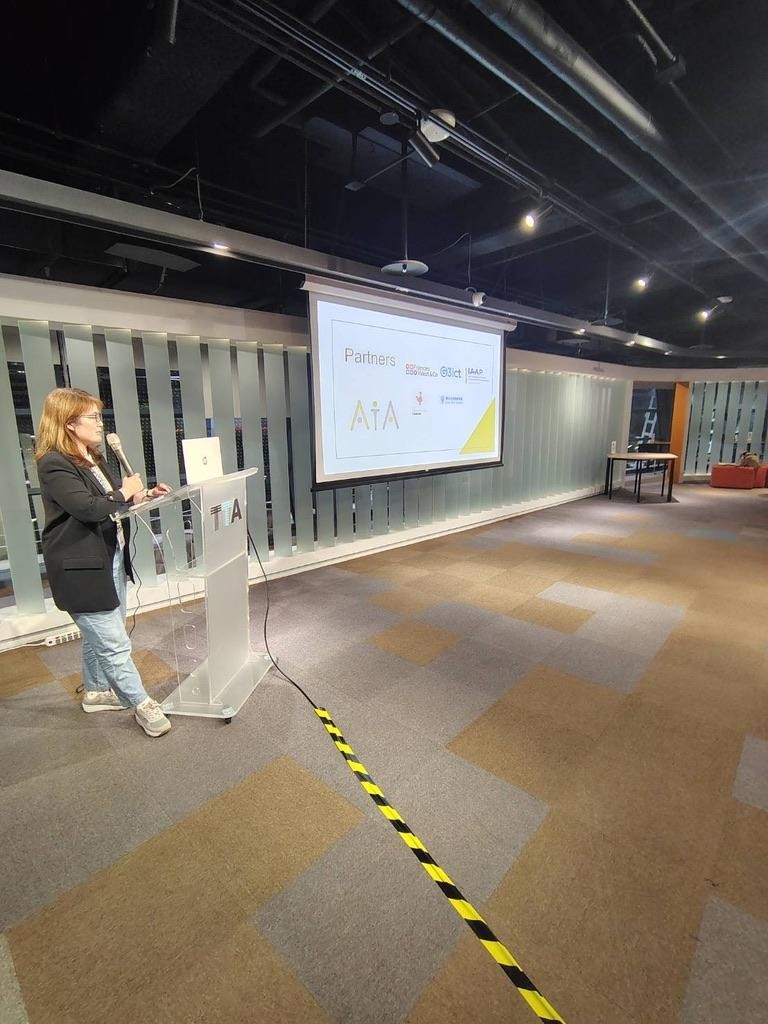
TechMoi joined the conversation to share the perspective, accessibility is entering a new phase. It is no longer only about checking whether a website passes a set of requirements. It is about helping organizations build accessibility into their design systems, product decisions, development workflows, and long-term business strategy.
As a W3C WAI Invited Expert, Claire Chang of TechMoi has been involved in international accessibility standards work, including discussions connected to the future direction of WCAG. This global standards perspective is especially important for Asian companies, as accessibility expectations are increasingly shaped by international frameworks, procurement requirements, and cross-border market demands.
For startups and product teams, this means accessibility should not be treated as a late-stage fix. It should become part of how teams define product quality from the beginning.
From Taiwan to Europe: Inclusive Innovation as a Bridge
Taiwan has a strong technology and design ecosystem. Europe has increasingly mature expectations around accessibility, inclusion, and responsible digital services.
Bringing these perspectives together creates a meaningful opportunity: helping startups and product teams build with global markets in mind from day one.
For companies that want to scale internationally, digital accessibility is becoming part of how products are evaluated — not only by regulators, but also by users, enterprise partners, investors, and customers.
Accessibility is not only a technical issue. It is a bridge between innovation and trust.
From Awareness to Action
GAAD is an important moment to raise awareness, but awareness alone is not enough. The next step is action.
For many teams, action can start small: reviewing key user flows, improving color contrast, writing meaningful alternative text, checking keyboard navigation, or learning how assistive technologies interact with digital products.
Accessibility does not require every team to become an expert overnight. But it does require a shift in mindset: from fixing accessibility at the end to building accessibility into product decisions from the start.
Thank you to everyone who joined us in Taipei, asked thoughtful questions, and contributed to the conversation. Thank you to La French Tech Taiwan, APAC Authentic Inclusion Association (APAC AIA), Raven Accessibility, Tiny Oak Studio, and TechMoi for creating a space where practical accessibility knowledge can be shared across the local product, design, startup, and business communities.
Accessibility is not just about making products compliant. It is about making digital products work better for everyone — and helping innovation scale more responsibly.
In Case You Missed It
French Tech Night 2026 : 10 Years of France–Taiwan Innovation Cooperation
French Tech Night 2026 took place on June 4th at Taiwan Tech Arena, alongside COMPUTEX and InnoVEX, gathering entrepreneurs, investors, corporates, and institutional stakeholders from France and Taiwan. This special edition marked a milestone: ten years of structured cooperation between…
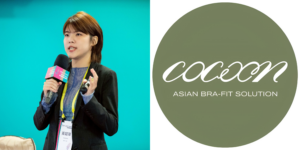
VivaTech Special Feature – Shao-Hua Huang, CEO, Cocoon Bravolution
On May 25, 2026, Florah Vixamar-Betton from La French Tech Taiwan interviewed Shao-Hua Huang, Founder and CEO of Cocoon Bravolution Ltd., to discuss the company’s mission to transform bra fitting through fit intelligence, personalization, and fashion technology, as well as…
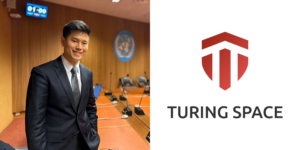
VivaTech Special Feature – Jeff Hu, CEO, Turing Space
On June 10, 2026, Florah Vixamar-Betton from La French Tech Taiwan sat down with Jeff Hu, Founder and CEO of Turing Space, to discuss the company’s vision for digital trust infrastructure, the future of verifiable identity, and its participation in…

Global Pathfinders France 2026 – Innovation & Start-ups
A two-week immersion into France’s innovation ecosystem coordinated by La French Tech Taiwan Since 2025, La French Tech Taiwan has been entrusted by the French Office in Taipei to design and coordinate the Global Pathfinders France – Innovation & Start-ups…
What’s Next
Our next newsletter will cover VivaTech and Global Pathfinders.
📩 Stay connected with La French Tech Taiwan as we continue to promote Taiwan-France innovation exchange and link global innovation networks.
La French Tech Taiwan will continue to foster dialogue, partnerships, and opportunities for cooperation. We warmly invite you to Share your collaboration interests with us.
Balancing France’s innovative romance with Taiwan’s pragmatic capital, we are shaping the future together.