

DigiFashion Forum 2026: Taiwan at the Crossroads of Fashion, AI, and Advanced Manufacturing
Our Co-President, Ching-Hua Lin Rosengard, organized the first physical edition of DigiFashion Forum on April 17-18.
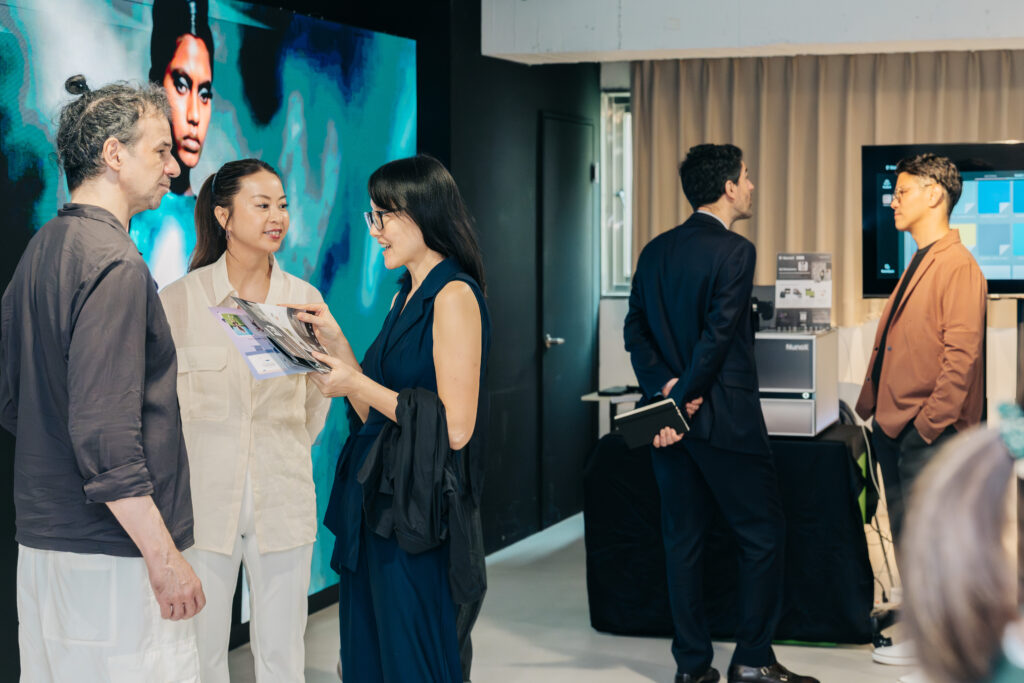
DigiFashion Forum 2026, held in Taipei in partnership with Digital Fashion Week (New York), brought together stakeholders across fashion, technology, investment and manufacturing to explore the integration of AI, advanced materials, and immersive digital environments within the fashion value chain.
The forum convened leading voices from across fashion, digital innovation, and advanced manufacturing, including :
- Clare Tattersall, Founder of Digital Fashion Week (New York);
- Ching-Hua Lin, Founder of DigiFashion Forum;
- Leslie Holden, Co-Founder of The Digital Fashion Group;
- Sébastien Borget, Co-Founder of The Sandbox;
- Tracy Greenan, Co-Founder of The Fashion in Gaming Awards;
- Joey Lee, Founder and CEO of Pixel Canvas;
- Jac Hsieh, Co-Founder and CEO of NunoX;
- Elena Dimopoulou, Dell x NVIDIA Ambassador and CEO of Apnea;
- Hungyi Chen, Founder of Portal:M;
- Louise Laing, Founder of PhygitalTwin & Alvalan;
- Long Vu, Founder of 5 x 12 Studio;
- Olivia Lee, Co-Founder of LIVVIUM & EXPOSED LAYERS;
- Takayuki Suzuki, CEO of MetaTokyo;
- Alice Chang, Founder and CEO of Perfect Corp;
- Amy Lu, Digital and Supply Chain Expert (ex-Louis Vuitton, ex-Apple);
- Cynthia Lin, Business Development Manager at Turing Space;
- Sally Yau, Consultant at FormX.AI;
- Haseeb Fonte, COO of Game Changing Style and the Fashion in Gaming Awards; and
- Ravi Nataraju, Founder of THINKTANK and Board Member of La French Tech Taiwan.
Together, they explored how AI, gaming ecosystems, and advanced materials are converging to redefine design, production, and consumer engagement, while positioning Taiwan as a key node in the development of scalable, immersive, and sustainable fashion ecosystems.
Hear from the organizer

“This is a strategic global ecosystem, a stage for the fashion value chain, reflecting the power of cross-border and cross-disciplinary partnerships in enabling fashion, innovation and creativity with interactive digital showcases.”
— Ching-Hua Lin, Founder of DigiFashion Forum and Co-President of La French Tech Taiwan
Event Highlights
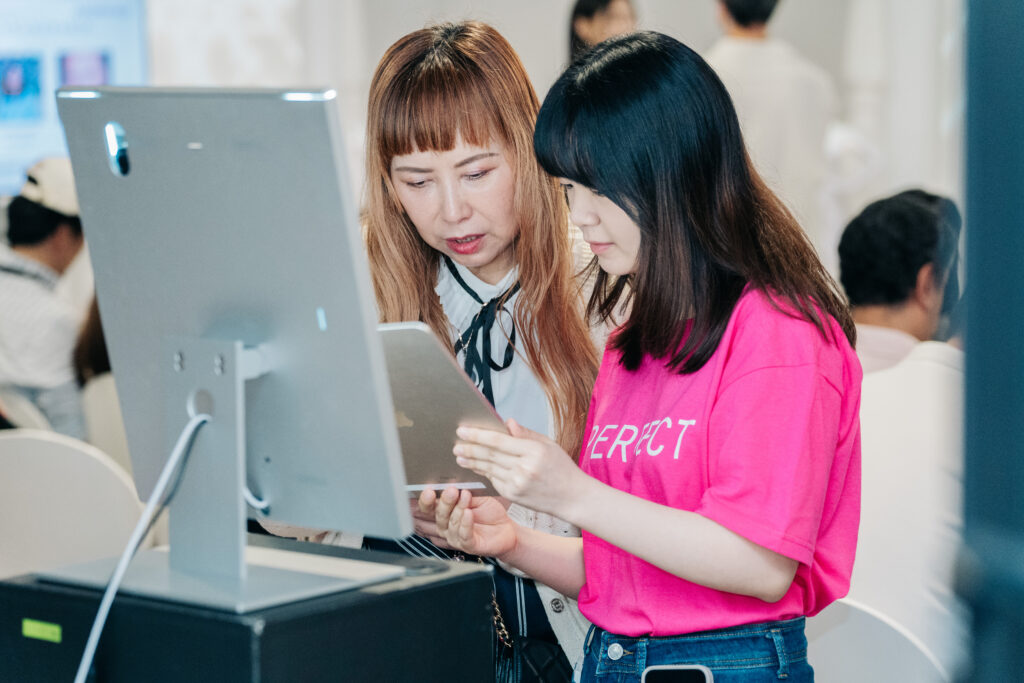
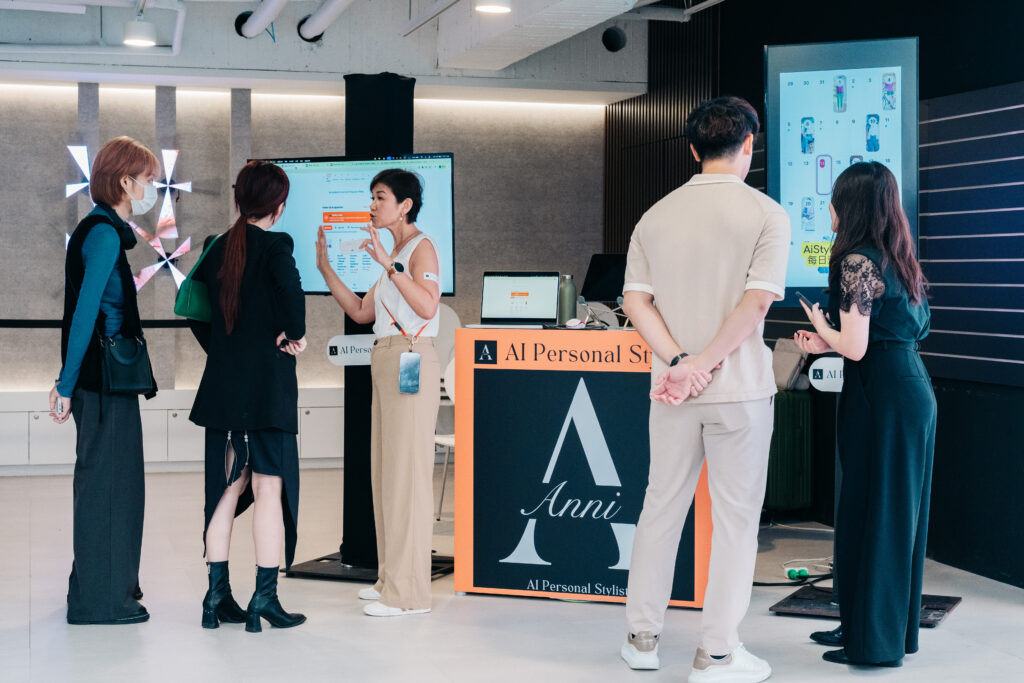
- Phygital Showroom: Visitors experience digital fashion in real time, alongside avatars.
- Cross-disciplinary Live Performances: Merging digital runway, technology, and interactive experiences to demonstrate practical applications of fashion tech innovations.
- Strong French Tech Taiwan presence: La French Tech Taiwan proudly supported this event and numerous board members came to the event.



Key Takeaways from Day 1
Two panel discussions examined how AI is reshaping both the front-end (creative and retail) and back-end (supply chain) of the fashion industry, with recurring tensions around control, identity, and data.

The first panel opened with a reframing of AI as a “creative collaborator” rather than a replacement. Ching-Hua Lin, Co-President of La French Tech Taiwan, was the moderator.
Speakers pointed to its growing role in moodboarding, prototyping, and avatar creation—tools that expand access to design beyond formally trained professionals. This democratization was presented as both an opportunity and a disruption: if “everyone can create,” what becomes of the designer’s role?
At the same time, panelists repeatedly pushed back against the idea of AI-led creativity. The discussion emphasized that storytelling, brand DNA, and emotional resonance remain human-driven. One recurring question was how far brands should follow AI-generated insights versus maintaining a distinct creative direction. “If you only listen to AI, you risk losing the story,” one speaker noted, framing AI as a tool that fills gaps in collaboration rather than replacing creative intent.
Personalization emerged as another contested space. If every product or experience is personalized, does brand identity become diluted? And from a business perspective, is full personalization financially viable at scale? It was suggested to shift the focus away from product-level customization toward personalization of the customer journey instead.
Physical retail was then reconsidered in this context. Rather than declining, it was framed as a space to reintroduce friction in a controlled way—leveraging AI to connect digital convenience with sensory, in-store experiences. Examples discussed included garments embedded with chips triggering in-store interactions. On one hand, speakers described highly immersive scenarios: AI-powered retail environments that recognize customers through digital identities, track purchase histories, and generate real-time outfit recommendations via avatars or smart mirrors. Concepts such as product passports and connected garments suggest a future where consumers become “characters” within a brand ecosystem. On the other hand, mechanisms to track product usage over time, potentially linking to sustainability incentives that could be translated into rewards for the customer.
Finally, Taiwan was positioned as a key enabler in this transformation, not from a branding standpoint but through its infrastructure as Taiwan has strong expertise in semiconductors and AI computing capabilities. However, speakers acknowledged a gap between technological potential and user experience, noting that current systems remain fragmented and overly complex for consumers and it remains key to keep the customer shopping experience as smooth as possible.

The second panel shifted focus to agentic AI, introducing it as a more autonomous layer of artificial intelligence capable of executing tasks rather than simply analyzing data. Framed as an emerging and still loosely playfield, agentic AI prompted as many questions as answers.
Our board member, Ravi Nataraju, moderated the panel.
A central point of discussion was use-case clarity. Rather than adopting agentic AI as a general solution, panelists emphasized the need to start from specific operational problems: sample tracking, documentation generation, coordination across suppliers. In this sense, agentic AI was described less as a breakthrough technology and more as an incremental tool—one that behaves “almost like an employee,” but requires careful supervision.
This analogy led directly to concerns about trust. Would companies be willing to “hand over the keys” to AI agents, particularly in complex supply chain environments? The comparison to interns was mentioned to illustrate the issue: autonomy must be earned, monitored, and constrained by rules.
The discussion then highlighted a distinction between traditional and agentic AI. While the former processes and interprets data, the latter acts on it—curating inputs, making decisions, and executing workflows. This shift raises both efficiency gains and new risks, especially in industries like fashion where processes are highly fragmented.
Data emerged as the main bottleneck. Contrary to expectations, cost was not identified as the primary barrier to adoption. Instead, speakers pointed to the poor quality, fragmentation, and lack of standardization of supply chain data. Without reliable inputs, agentic systems struggle to deliver consistent outputs—making data infrastructure a prerequisite for meaningful deployment.
Despite these limitations, there was broad agreement on where value could be created: automating repetitive, low-value tasks and freeing human workers to focus on creative and strategic activities. Still, the tone remained cautious. Agentic AI was described as a “greenfield” space—promising, but still largely experimental, particularly in the context of fashion’s complex global supply chains.


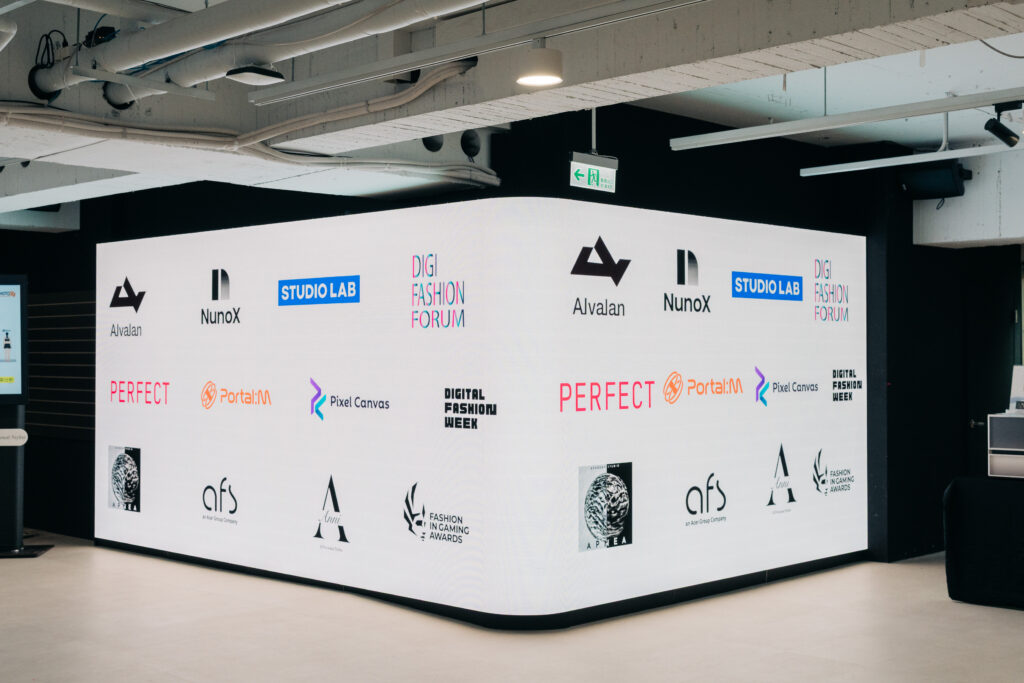
Thank you to everyone who came and supported this forum.