France–Taiwan Executive Dialogue on AI & Biotech Innovation
Building Strategic Bridges Between AI, Life Sciences, and Cross-Border Innovation
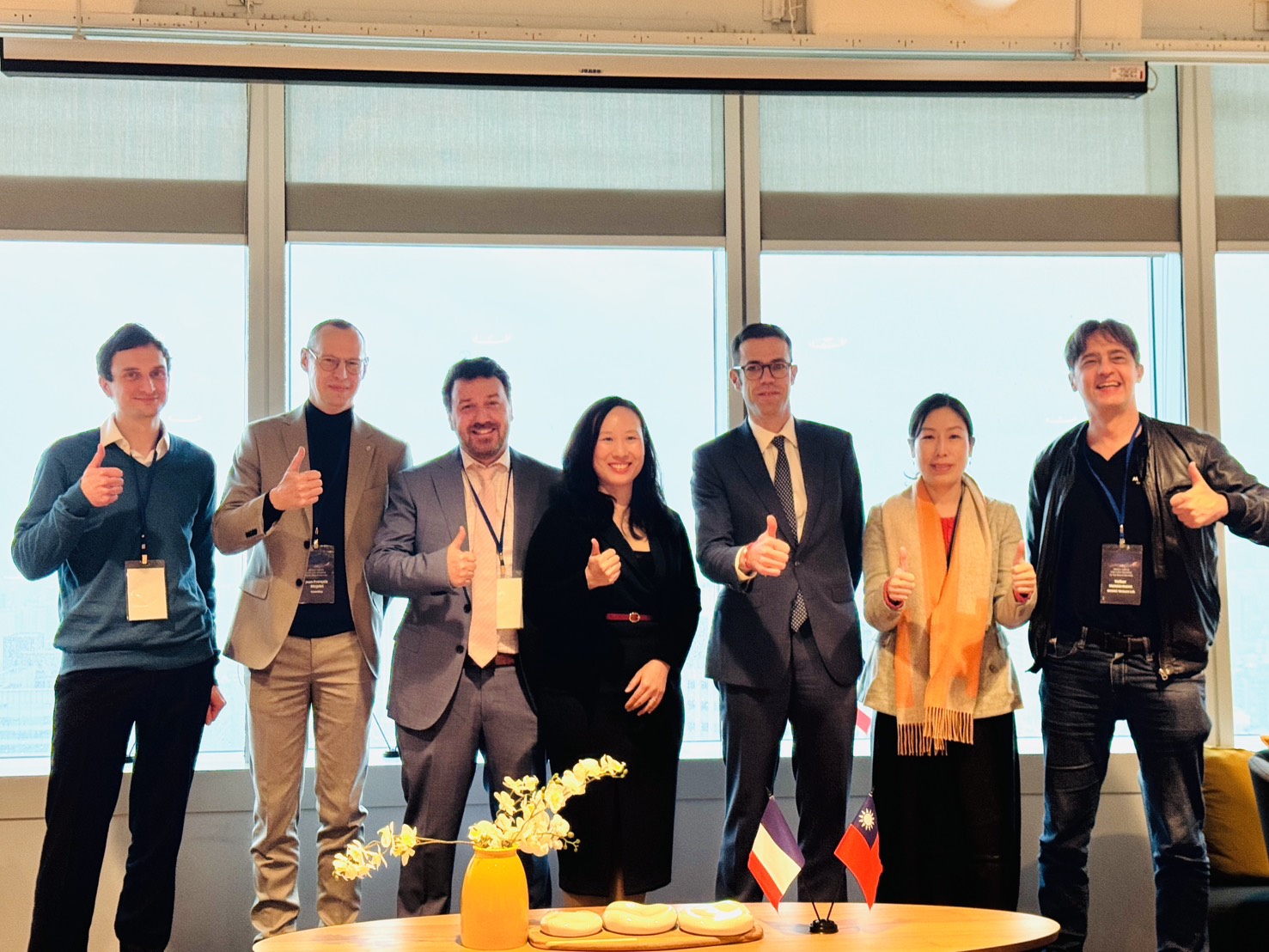
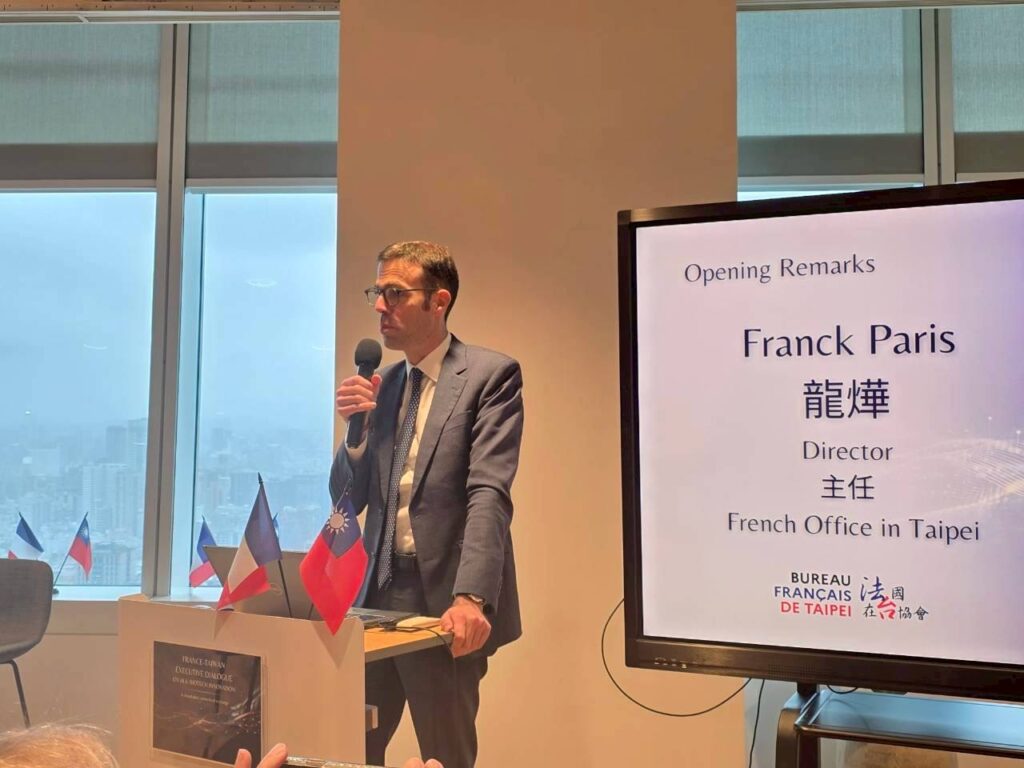
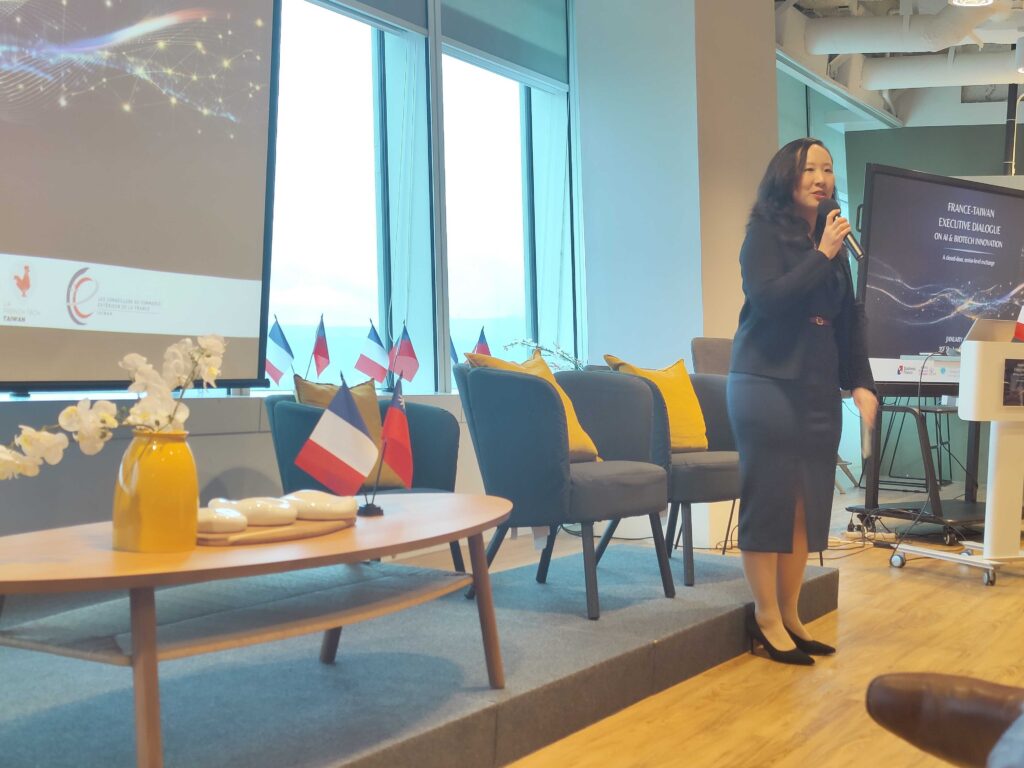
On January 22, 2026, senior leaders from the French and Taiwanese innovation ecosystems gathered at Taipei 101 for the France–Taiwan Executive Dialogue on AI & Biotech Innovation, a high-level, invitation-only event co-organized by Business France Taiwan and InFocus Therapeutics.
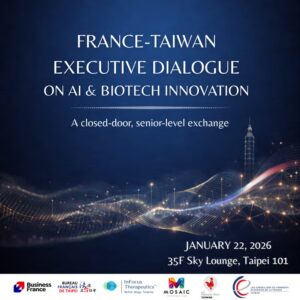
The dialogue brought together key figures from biotech, pharmaceuticals, investment, and deep tech, including Emily Fang, Founder and CEO of InFocus Therapeutics; Karen Yu, President of the Industrial Technology Investment Corporation (ITIC); Jean-François Mirjolet, Ph.D., former Head of Research at Inventiva; Nicolas Martin, Portfolio Solution Lead (Director) at Roche; and Jérémy Besnard, Ph.D., former Co-Founder and Chief Designer of Exscientia. Together, they examined how AI is reshaping drug discovery and how France-Taiwan cooperation can accelerate innovation across the life sciences value chain.
Spotlight on InFocus Therapeutics
As co-organizer of the dialogue and led by its CEO Emily Fang, InFocus Therapeutics plays a central role in advancing AI-driven drug discovery across borders. The startup exemplifies a new generation of biotech innovators combining advanced computational methods with deep scientific expertise to accelerate early-stage R&D.

AI in Drug Discovery: From Promise to Practice
A central theme of the discussion was the concrete role of AI in medical research and drug discovery. Beyond hype, speakers emphasized AI’s ability to significantly improve precision and speed in early-stage R&D – particularly through virtual screening, molecular simulation, and prediction of drug-target interactions.
However, panelists were equally clear about AI’s current limitations. AI systems do not generate data on their own; they depend on high-quality datasets, including information on failed experiments – data that is often unpublished. Learning from failure remains a structural challenge in biomedical R&D, underscoring the need for better data-sharing frameworks and incentives.
AI is most effective, speakers agreed, up to the preclinical and early clinical stages. While it can help identify promising candidates faster and reduce downstream costs, it cannot eliminate the long timelines, uncertainty, and regulatory complexity inherent to clinical trials.
Taiwan and France: Complementary Strengths, Shared Momentum
The discussion highlighted why France and Taiwan are natural partners in AI-driven biotech innovation.
France benefits from:
- A strong public research base
- Sustained government support for deep tech and health innovation
- A growing AI ecosystem aligned with national R&D strategy
Taiwan brings:
- World-class computing hardware and semiconductor infrastructure
- Strong capabilities in scaling, manufacturing, and financing innovation
- A strategic position at the heart of global data computation
Unlike semiconductors, which is an industry characterized by short product life cycles, intense competition, and capital-heavy investment, the biotech sector operates on long horizons shaped by clinical trials and regulatory approval. Leveraging AI allows Taiwan to extend its technological strengths into life sciences, accelerating discovery while managing risk.
Financing Innovation: A Structural Challenge
Funding emerged as a major bottleneck, particularly at early and exploratory stages. Biotech innovation requires long-term capital, yet many tech investors view timelines as too extended, while scientific founders often prioritize product development over platform technology.
As a result, education and alignment between investors, scientists, and entrepreneurs remain time-consuming and complex. International capital plays a key role, but due diligence is becoming increasingly stringent in a more cautious funding environment.
AI can help de-risk early research, but panelists stressed that chance and failure remain intrinsic to innovation. Not all investments will yield immediate results, and this uncertainty must be structurally acknowledged.
Startups, Big Pharma, and the AI Learning Curve
Another key contrast discussed was between startups and large pharmaceutical companies. Startups tend to adopt AI in an end-to-end, agile manner, rapidly integrating learning across the R&D pipeline. Large organizations, by contrast, face coordination challenges, with many stakeholders involved in decision-making, though they are catching up quickly.
The consensus: AI is not a silver bullet, but a powerful accelerator – particularly when embedded early, strategically, and with realistic expectations.
Sovereignty, Strategy, and International Cooperation
The dialogue also addressed questions of technological sovereignty. While France’s ambition to strengthen national R&D capacity is part of a broader strategic vision, speakers emphasized that sovereignty does not imply isolation.
Countries seek to:
- Retain core technologies domestically
- Attract global talent
- Reduce over-dependence on external systems
Yet meaningful innovation in AI and biotech ultimately requires cross-border collaboration, balanced governance, and interoperability between national and multinational actors.
Looking Ahead: Regulation and the Next Frontier
Looking to the future, panelists pointed to emerging concepts such as virtual human models; digital simulations that could allow researchers to identify failures earlier and stop unpromising drug candidates sooner.
However, realizing this vision will require progress on regulatory harmonization, data protection frameworks (including GDPR-related challenges), and closing international gaps in AI governance.
This executive dialogue reaffirmed a shared conviction: AI will not replace scientific judgment, but it can profoundly reshape how research is conducted, financed, and scaled. By combining France’s innovation momentum with Taiwan’s industrial and computational strengths, both ecosystems are well positioned to co-create the next generation of biotech breakthroughs.
In the coming months, La French Tech Taiwan will publish a series of executive interviews and company portraits, offering readers the opportunity to gain deeper insight into InFocus Therapeutics’ vision, technological approach, and cross-border strategy directly from its leadership team.
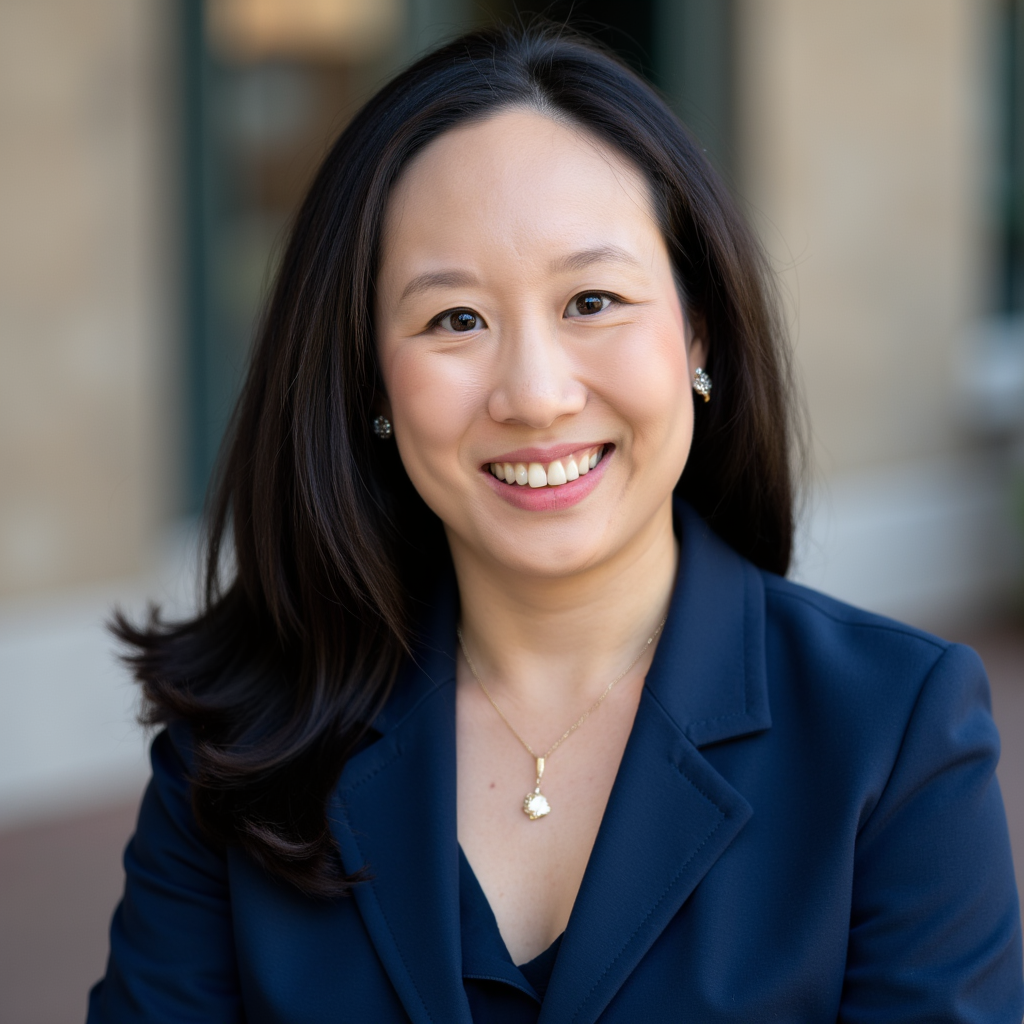
Learn more from Emily Fang, CEO and Co-Founder of InFocus Therapeutics!
4 thoughts on “France–Taiwan Executive Dialogue on AI & Biotech Innovation”
Comments are closed.