Interview Series – Dirk Tomandl, CTO & Co-Founder, InFocus Therapeutics
On April 2nd, 2026, La French Tech Taiwan conducted an exclusive interview with Dirk Tomandl, CTO and Co-founder of InFocus Therapeutics, discussing his role as CTO and the technical challenges that an AI-driven drug discovery startup can face.
Interviewer: Florah Vixamar-Betton
Date of interview: 2026/04/02
Location of interview: Online
List of Acronyms: DT = Dirk Tomandl, IN = Interviewer
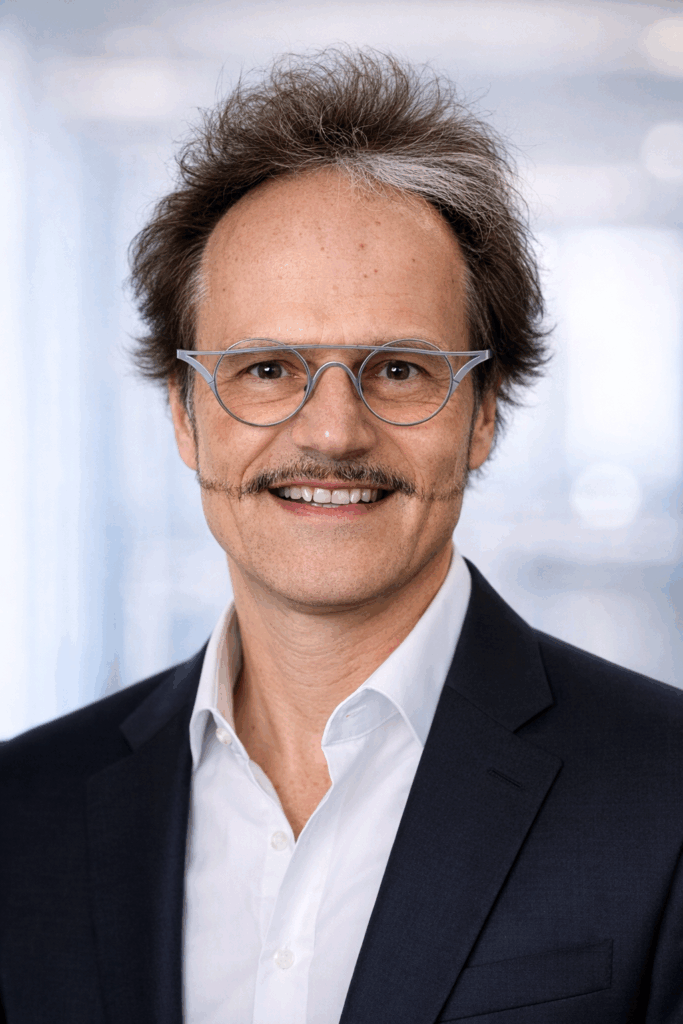
Computational drug discovery executive with 20+ years of experience at the intersection of cheminformatics, AI/ML, data science, scientific software development, and discovery project support across Lilly, Atomwise, Corteva, Dow AgroSciences, and startup biotechs. Brings deep hands-on expertise in computational drug discovery and scientific computing with extensive experience connecting these capabilities to medicinal chemistry, hit/lead generation, and lead optimization. Proven track record as a leader and CTO who has built and deployed analytical capabilities from the ground up, managed million-dollar portfolios, made critical build-versus-buy decisions, and translated predictive, generative, and decision-support approaches into platforms and workflows that enable better discovery decisions.
IN: Could you briefly introduce your scientific background and explain your role as CTO and co-founder of InFocus Therapeutics?

DT: I am a cheminformatician and AI scientist by training. Over the course of my career, I have built computational platforms and led teams across multiple drug discovery organizations, including Eli Lilly, Dow/Corteva, and Atomwise. My background spans cheminformatics, QSAR, ADME/Tox, virtual screening, molecular design, scientific computing, machine learning, and artificial intelligence.
At InFocus Therapeutics, my role as CTO and co-founder is to translate that experience into a computational discovery platform that helps our teams make better decisions. This platform, AIDE—our Artificial Intelligence Discovery Engine—is designed to guide which molecules to design, prioritize, and test next.
In practice, I lead platform architecture, computational strategy, and the integration of AI into day-to-day discovery workflows. A central objective is to ensure that the system remains tightly connected to medicinal chemistry, biology, and real program decisions, ultimately supporting meaningful medical outcomes.
Technical Architecture of the AI Platform
IN: From a technical standpoint, how is the InFocus discovery platform structured? What are the main layers of the system?
DT: Technically, AIDE can be described as a layered decision engine structured around the design-make-test-analyze (DMTA) cycle.
The first layer is the scientific informatics layer, which captures compounds, experimental data, assay results, design history, and hypothesis tracking. It connects to electronic lab notebooks, CRO workflows, and visualization tools.
The second layer is the analysis and modeling layer, where predictive models such as AIDE Crystal, along with machine learning and computational chemistry approaches, are used to interpret structure-activity relationships and evaluate options.
The third layer is the design and prioritization layer, where generative and knowledge-based tools enumerate molecules and propose candidates. Systems such as AIDE Select then prioritize what to synthesize next, depending on the discovery stage.Finally, there is the execution and validation layer, which includes synthesis, biological testing, and the integration of experimental feedback into the next iteration. The key architectural principle is this closed feedback loop.
IN: Many AI-driven discovery platforms emphasize large-scale data modeling. How does InFocus balance data-driven learning with mechanistic biological understanding?
DT: We do not see those as competing philosophies. AI is very effective at predicting and correlating, but it does not decide.
Our approach is to combine statistical learning with mechanistic and structural reasoning. This includes using chemically aware and partially physics-based representations, maintaining strong involvement from medicinal chemists, and favoring models that are appropriately sized rather than unnecessarily complex.
The guiding principle is that models should inform scientific judgment, not replace it. Human experts remain the final decision-makers. In that sense, AI functions as a multiplier of scientific expertise rather than a substitute for it.
AI Integration into Drug Discovery Workflows
IN: Where does AI most concretely improve the design-make-test-analyze cycle in early drug discovery?
DT: The most tangible impact is in the design and analysis phases. AI allows us to explore much larger areas of chemical space and identify patterns in high-dimensional datasets.
However, the key benefit is not speed in isolation: it is decision quality and learning efficiency. If you can reduce low-value experiments, fail earlier on weak hypotheses, and prioritize stronger candidates sooner, you improve both cycle time and overall program efficiency.
This translates into fewer iterations and more informative cycles, which is where AI delivers its most concrete operational value.
IN: In practical terms, how do scientists interact with AI tools inside the discovery workflow? Is the process automated or more of a decision-support system?
DT: It is fundamentally a structured decision-support system, not a fully automated pipeline.
Scientists interact with property predictions, generative design tools, hypothesis tracking systems, and prioritization outputs. These outputs are always interpreted in context by medicinal chemists, biologists, and computational scientists.The platform is explicitly designed as human-in-the-loop. While we are exploring more agentic capabilities, domain experts retain authority over decisions. The objective is not to replace scientists, but to empower them with better tools and more structured insights.
Data Strategy and Learning from Failure
IN: From a technical perspective, how do you structure datasets so that failed experiments become useful signals rather than noise?
DT: The key is to avoid reducing outcomes to binary labels. A failed experiment is only meaningful if it is captured with context – what hypothesis was being tested, under which assay conditions, how close analogs behaved, and what part of the cascade failed.
A negative result is not noise if it is reliable. It contributes to defining the local structure-activity landscape and helps narrow subsequent design decisions.
In fact, failed data can be highly informative, particularly when the underlying reasons for failure are well understood.
IN: How do you deal with the data scarcity problem that many biotech startups face when training predictive models?
DT: Data scarcity is a fundamental constraint. We address it by designing systems specifically for low-data regimes, rather than assuming large-scale datasets.
This involves using chemically aware and partially physics-based embeddings, prioritizing generalizable models, and leveraging unlabeled or synthetic data where appropriate.
It also requires discipline in data generation. Not every experiment contributes equally, so the focus is on generating data that is maximally informative for the next decision step.
Building an AI-Native Biotech
IN: What are the main advantages and disadvantages of building an AI-native biotech company from the ground up?
DT: The primary advantage is that you can design the entire operating model; data flows, decision systems, and team interactions, around AI from the outset. There is no need to retrofit into legacy infrastructure, which allows for tighter alignment between computational and experimental teams.
The downside is the lack of scale. You do not have the portfolio breadth, capital base, or redundancy of large pharmaceutical companies.
As a result, execution discipline becomes critical. You need strong alignment within a smaller team, clear prioritization, and early stop/go decisions, where each choice has a higher relative impact.
Future Outlook
IN: Looking ahead, which technological developments will most significantly shape AI-enabled drug discovery?
DT: Predicting the future precisely is difficult and has proven us wrong a lot of times, but the field is clearly moving through a convergence of several trends.
These include improvements in structure-aware modeling, particularly for complex targets such as RNA; advances in low-data and self-supervised learning; more capable but well-governed agentic systems; tighter integration between computation and experimentation; and the emergence of multimodal models that connect chemistry, biology, and translational constraints.
A key scientific challenge remains the ability of AI to truly understand and explain structure-activity relationships at a level comparable to experienced drug discovery scientists.Overall, the objective is not simply to generate more molecules, but to increase decision precision at each iteration of the discovery cycle.
We are living in a period where modern computational technologies provide unprecedented capabilities. These tools can be extremely powerful, but they also require careful guidance and responsible use.
AI systems can be highly intelligent in specific tasks, yet still lack contextual understanding. It has the maturity of a toddler. In that sense, they need to be guided by human expertise. The real challenge is not just building powerful models, but learning how to interact with them effectively – understanding what they are doing, where they are reliable, and how to integrate them into scientific reasoning.
If used correctly, they can significantly enhance our ability to make better decisions in drug discovery.
On January 22, 2026, senior leaders from the French and Taiwanese innovation ecosystems gathered at Taipei 101 for the France–Taiwan Executive Dialogue on AI & Biotech Innovation, a high-level event co-organized by Business France Taiwan and InFocus Therapeutics. As co-organizer of the dialogue, InFocus Therapeutics represents a new generation of AI-driven biotech companies operating across France and Taiwan. We also interviewed Emily Fang, CEO & President of InFocus Therapeutics. More about the Executive Dialogue and our other interview: