
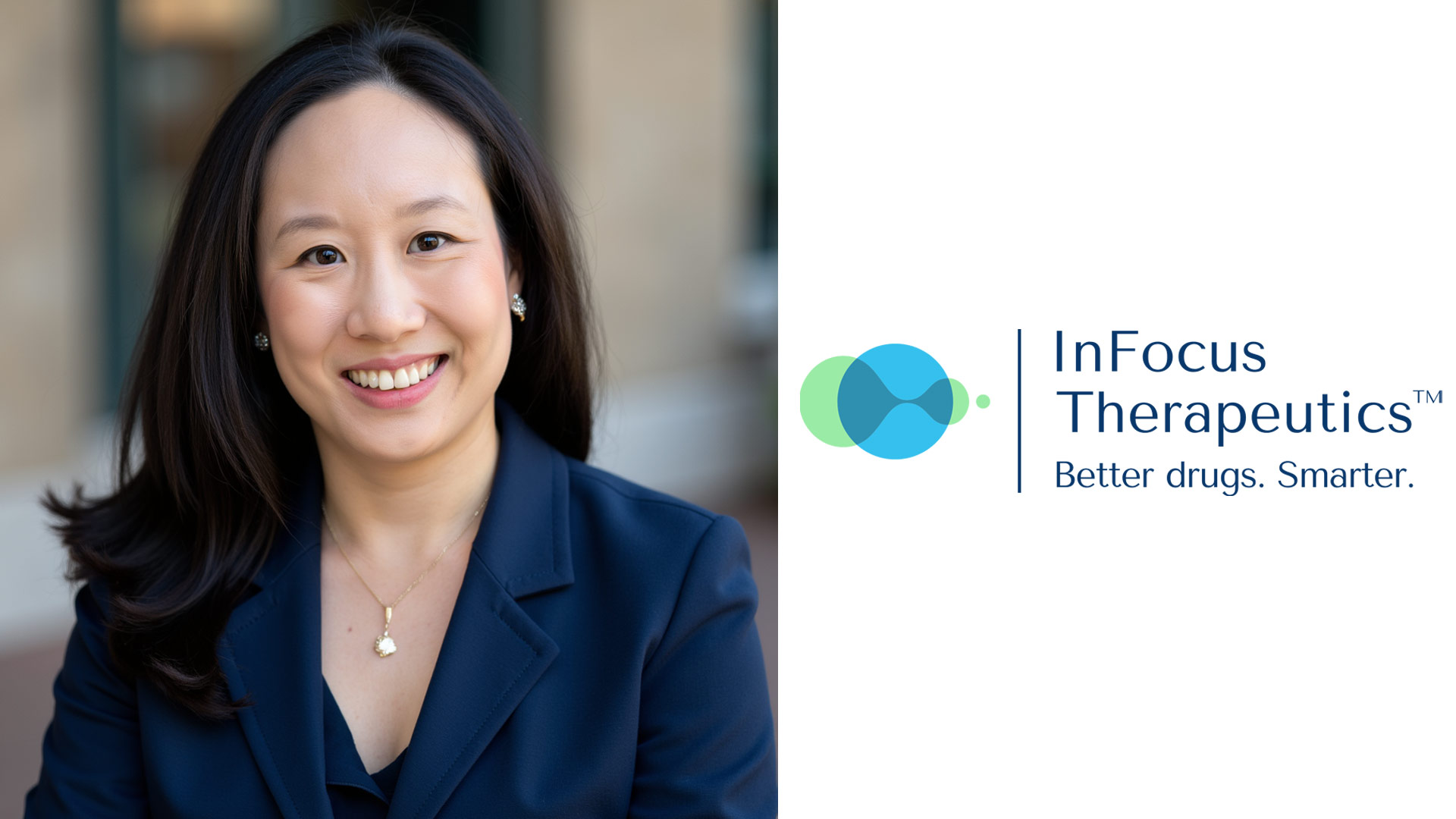
Interview Series – Emily Fang, President & CEO, InFocus Therapeutics
On January 22, 2026, senior leaders from the French and Taiwanese innovation ecosystems gathered at Taipei 101 for the France–Taiwan Executive Dialogue on AI & Biotech Innovation, a high-level event co-organized by Business France Taiwan and InFocus Therapeutics. As co-organizer of the dialogue, InFocus Therapeutics represents a new generation of AI-driven biotech companies operating across France and Taiwan. To further explore this cross-border innovation model, La French Tech Taiwan conducted an exclusive interview with Emily Fang, Founder and CEO of InFocus Therapeutics, discussing her career path, AI-driven drug discovery, and the realities of building a biotech company in Europe.
Interviewer: Florah Vixamar-Betton
Date of interview: 2026/02/11
Location of interview: Online
List of Acronyms: EF=Emily Fang, IN=Interviewer
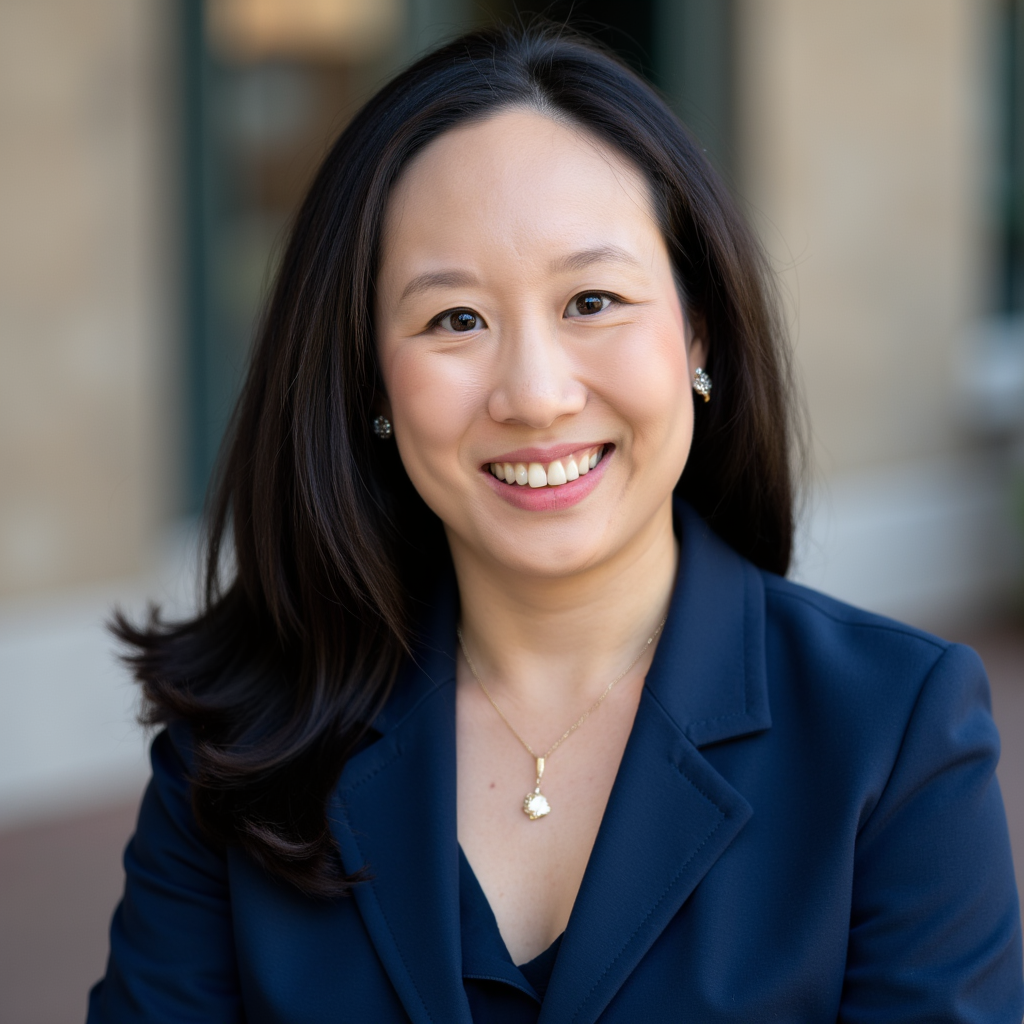
Emily Fang
CEO and President
InFocus Therapeutics
IN: Introduce yourself. Talk about your role within InFocus Therapeutics.
EF: Founder and CEO of InFocus Therapeutics, an AI-driven drug discovery and development startup where we leverage advanced data and AI to transform how new drugs are discovered, bringing better therapies to patients faster.
I have 15 years of experience working with integrated drug discovery teams to advance molecules into the clinic, across neuroscience and oncology, in biotech, pharma and contract research organizations. My scientific training spans pharmaceutical chemistry and molecular biology, and my career has been international, with experience across Europe, the US, and Asia.
My trajectory combines scientific leadership and business development: sales, platform strategy, partnerships, and value creation. I’ve worked extensively within the French biotech ecosystem while building strong transatlantic networks.
At InFocus, we position ourselves as “drug hunters” with strong execution capacity. We integrate AI in a human-in-the-loop model: technology supports scientific reasoning and decision-making; it does not replace it. The objective remains commercial translation and patient impact.
IN: InFocus positions itself at the intersection of AI and early-stage drug discovery. What is your core value proposition, and what problem are you addressing in current R&D models?
EF: Our value proposition is not primarily speed, but improved decision quality in early-stage drug discovery.
Drug development suffers from high failure rates, especially in complex diseases. The root cause is often insufficient clarity in target selection and hypothesis framing. Early errors compound downstream, making programs costly and inefficient.
We focus on strengthening early decision-making through:
- AI-supported hypothesis generation
- Rational molecular design
- Structural and mechanistic characterization
- Disciplined, data-informed prioritization
AI enables the generation and systematic evaluation of molecular candidates, particularly within complex biological systems, including emerging genetic and nucleic acid-based therapeutic approaches. By improving early-stage rigor, we increase the overall probability of success and improve program economics.
Technology, AI, and the Startup Experience
IN: Where does AI deliver the clearest gains today, and where do its structural limits remain?
EF: AI can deliver meaningful impact in early discovery, such as modeling relationships between chemical space and biological activity, and identifying subtle signals across high-dimensional datasets. Humans are limited in the number of variables they can process simultaneously; AI can correlate and prioritize at scale.
It allows compression of iteration cycles (i.e., design-make-test-analyse cycles), accelerating learning and hypothesis refinement.
However:
- AI predicts and correlates; it does not decide.
- Biological systems remain complex and context-dependent, requiring human judgment and domain expertise.
- Clinical, regulatory, and commercial constraints ultimately shape development decisions.
AI is a decision-support layer. Final prioritization remains human-led.
IN: High-quality data, including negative results, is often a bottleneck. How do you navigate data availability and learning from failure?
EF: Failed results are underutilized because they are rarely well-characterized. Data describing why something failed is essential.
Scarcity is also an opportunity. Large pharmaceutical companies are often organized in silos. A startup can:
- Integrate negative data directly into decision models
- Focus on niche, high-value datasets
- Build proprietary prioritization frameworks
- Implement insights faster due to shorter feedback loops
Data generation in a startup context is more agile and strategically aligned with decision-making.
IN: What are the main trade-offs of building an AI-native biotech from the ground up?
EF: Startups typically lack legacy infrastructure and diversified portfolios, whereas large multinational companies can run multiple programs in parallel and absorb failure within a probabilistic, portfolio-based framework.
Startups operate under resource constraints. This requires:
- Clear strategic focus
- Strong internal alignment
- Early stop/go discipline
- Cohesive, cross-functional collaboration
Teams are tightly integrated. Decisions must be deliberate.
Talent acquisition is also more challenging; experienced profiles are expensive. At the same time, small structures are often more comfortable operating under uncertainty.
International Background: Taiwan, France, and Cross-Ecosystem Dynamics
IN: How does InFocus operationalize international partnerships?
EF: Partnerships are strategic at every stage.
- US: capital markets, broader financing strategy, commercial partners.
- France/Europe: strong R&D ecosystem, institutional networks, clinical infrastructure, long-term orientation (e.g., Paris-Saclay Cancer Cluster, FranceBiotech, Paris Biotech Santé).
- Taiwan: AI and computing strengths, growing deep-tech investment capacity.
Partnerships must be value-creating on both sides. Key dimensions include scientific complementarity, governance structure, data stewardship and decision rights, and ownership and IPO structuring. Execution discipline and clarity in roles are essential.
IN: How do differences in research culture and risk appetite affect collaboration?
EF: Risk appetite varies significantly:
- US West Coast (San Francisco): strong platform bets, early investment, ambition-driven narratives.
- US East Coast (Boston): biotech differentiation and clinical positioning are central.
- France: structured collaboration frameworks, public funding support, longer timelines.
- Taiwan: rapid AI adoption, less legacy skepticism toward new technologies.
Effective collaboration requires understanding each ecosystem’s logic and incentives. Alignment comes from recognizing these differences and designing partnerships accordingly.
IN: What conditions are still missing to make France–Taiwan cooperation more fluid?
EF: Over the past decade, Taiwan has further strengthened its international positioning, increasingly establishing itself as a regional hub.
France can build on its strong scientific foundations and integrate more deeply into the broader European innovation ecosystem to expand access to talent, capital, and partnerships.
Key enablers include a foundation of mutual respect and genuine willingness to engage long term, rather than transactional collaboration. Structured joint funding mechanisms—such as bilateral or multilateral collaborative grants—can de-risk early partnerships and create aligned incentives from the outset. Research mobility programs are equally critical, enabling scientists and entrepreneurs to embed within counterpart ecosystems and build trust through shared execution. Finally, cross-training initiatives that expose teams to different regulatory, scientific, and commercial environments help create a common language and more resilient, scalable partnerships.
IN: As a founder in France, what labor regulation challenged you most?
EF: France operates within a strong and protective regulatory framework, which provides institutional stability. As a founder, the main challenge has been long-term visibility for innovation-driven companies, particularly in an environment where startups need flexibility in hiring and team structuring under high uncertainty.
That said, France is very supportive of deep-tech entrepreneurship in recent years. Mechanisms such as the Crédit d’Impôt Recherche (CIR) and Jeune Entreprise Innovante (JEI) status reduce R&D and employment costs, while Bpifrance programs such i-Lab and i-Nov competitions, and France 2030 initiatives provide non-dilutive funding and scale-up support. Together, these measures meaningfully de-risk early scientific and technological development.
Socio-Political and Structural Challenges
IN: How do regulatory and data protection frameworks shape strategy?
EF: Regulatory and data protection frameworks shape strategy from the outset. In early-stage biotech, this means integrating compliance into the design of the company and its programs—anticipating data localization and transfer requirements, managing cross-border obligations, maintaining rigorous documentation, and ensuring clear governance structures. Rather than viewing regulation as a constraint, we design within it, which ultimately strengthens program robustness and reduces downstream friction.
IN: Do demographic pressures influence AI-driven drug discovery priorities?
EF: Yes, demographic shifts, particularly population aging in Taiwan and across Asia, increasingly shape therapeutic focus areas. The rising burden of oncology and neurodegenerative diseases elevates public health urgency and long-term cost pressures, influencing funding priorities, capital allocation, and market demand. In these high-burden and cost-intensive indications, AI-driven efficiency gains in early discovery become strategically and economically compelling.
IN: How do you balance technological sovereignty with global collaboration?
EF: Technological sovereignty and global collaboration are not mutually exclusive. Drug development inherently depends on access to diverse patient populations, international talent, and global capital—so isolation is not a viable strategy. The balance lies in structured openness: transparent governance, clear stakeholder alignment, and well-documented data handling frameworks that protect strategic assets while enabling cross-border cooperation.
In a shifting geopolitical landscape, adaptability is essential. France brings strong R&D depth and regulatory rigor; Taiwan contributes advanced computing capabilities and sustained public commitment to biotech; the US offers capital scale. The unifying principle is scientific coherence—keeping high-quality science at the center—so that collaboration ultimately translates into expanded therapeutic options for patients.
More about the Executive Dialogue:
Executive Dialogue on AI & Biotech Recap
Stay tuned for our upcoming interview with another member of the InFocus Therapeutics team!
2 thoughts on “Interview Series – Emily Fang, President & CEO, InFocus Therapeutics”
Comments are closed.