Semicon 2026 – Raphaël Bijaoui, Business Developer at Qolumbus
Raphaël Bijaoui, Business Developer at Qolumbus, was interviewed by Martin Gissat of French Tech Taiwan to discuss the company’s strategy and share their insights from their visit to Taiwan for SEMICON.
Interviewer: Martin Gissat
Date of interview: 2026/09/24; Online
FTT: Thank you for agreeing to this interview. To start off, could you please introduce yourself?
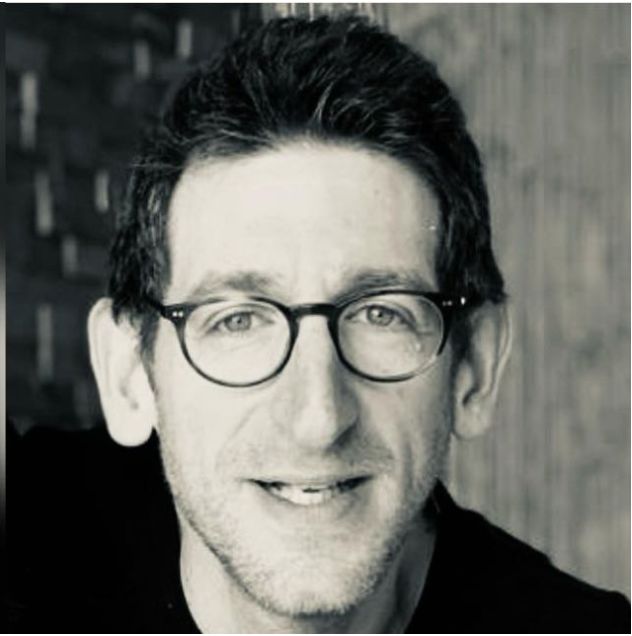
Qolumbus: My name is Raphaël Bijaoui. I grew up and went to school in France. I studied applied mathematics and geopolitics. I worked for a short time in France in the field of statistics and data. Then, like many French people, I moved to London to work in finance. I had a career in banking. I was an engineer, what’s called a “quant” in financial jargon. After that, I worked in project management, and business strategy and resigned in 2023 to start a sabbatical with my family. When I came back, I had the opportunity to join Qolumbus. What’s interesting about quantum computing is that, I thought quantum physics would finally take me away from geopolitics. Then I discovered export controls, semiconductor sovereignty and government funding.
FTT: You’ve joined a quantum computing company called Qolumbus. Can you explain what challenges your technology aims to solve in the design of quantum chips for computing?
Qolumbus: It all started with an observation. The central challenge isn’t just increasing the number of qubits (The qubit is the basic unit of quantum information. It’s like the bit in classical computing.). The real challenge is building what’s called a “fault-tolerant quantum computer.” That is, being able to build a quantum computer capable of continuing to produce reliable results, even when some of its qubits make errors, because those errors will be detected and corrected during the computation. It’s Imagine an airplane or a data center: The system is designed so that, even if errors occur along the way, the system continues to function and produce reliable results. And this a fault-tolerant quantum computer requires three necessary and sufficient conditions. The first is coherence, the ability to preserve quantum information for a sufficiently long time. In this area, there are companies that are particularly strong: Quantinuum, IonQ, and PlanQC. The other condition is what’s called “control and readout», that is, the ability to manipulate qubits quickly and precisely, as well as to detect and correct errors. Of course, IBM, Google, and IQM are the best-known companies in this field. And the third condition, which is by no means the least important, is scalability. That is, the ability to scale from a few qubits to a very large number of qubits without the system becoming too complex or impossible to build. And for that, we have Diraq, Quobly, and Quantum Motion. Today, what we’ve observed at Qolumbus is that there are different technologies, each with their own strengths. Some technologies or companies excel in coherence, others in control, and still others in scalability. What we’ve managed to do, or at least prove, is create an architecture that combines the strengths of two different architectures. It’s a kind of hybrid technology. That’s what we do. We use silicon spin qubits for memory and coherence, and superconducting circuits for control and connectivity. We achieve all of this by combining several different technologies. That’s the core idea behind Qolumbus.
FTT: Where are you at today in terms of the company’s growth?
Qolumbus: We have three operational qubits. It’s nothing, and yet it’s a lot, because it’s an architecture that many people thought it was impossible to build. It was a Franco-Taiwanese researcher, one of the founders of Qolumbus, who came up with the idea and made it happen. Now the team has expanded. We raised an initial 3 million in pre-seed funding, and we’ve set up two partnership projects. We have an industrial partnership with the CEA, where we manufacture our chip, and with Quantum Machines, a well-known company in the quantum ecosystem based in Israel. Quantum Machines hosts our chip. We have a Qolumbus engineer who is working at Quantum Machines, and he’s writing the instructions that tell the chip, the processor, which signals to send, when to send them, for how long, and so on.
We also have business partnerships that are just getting started. One is in the financial sector, with a financial institution where we’ll be working on a pricing use case, and another is with a chemical company where we’ll be working to accelerate the discovery of very specific molecules for preserving electric vehicle batteries.
In addition, we have expanded our advisory board to include leading figures from industry and quantum physics.
We are now launching our Series A funding round. We’re looking to raise 15 million in the Series A round.
FTT: What is your vision for the coming years?
Qolumbus: Over the next few years, we want to manufacture this chip with a large number of qubits. We plan to do this gradually, moving from 20 to 400, then to 2,000, and so on. Second, we want to expand our commercial use cases. We don’t want to just stay in our basement, build a chip, and stop there. Finally, we want to improve the manufacturing process, which may currently pose an operational risk, since our manufacturers are spread across several continents. We therefore want to make Taiwan the spearhead of this process. That was the purpose of my visit to Taiwan.
FTT: That’s a good transition, what motivated you to come to Taiwan? Was it for SEMICON, or for other reasons as well? And what kind of opportunity were you looking for?
Qolumbus: There’s a lot going on in Taiwan. We want to create a more stable environment for manufacturing our architecture and our chip. Manufacturing requires creating a stable environment for our spin qubits, and that requires lithography to define the areas where we want to place the qubits. We need technology that allows us to implant atoms. These are bismuth atoms, which are well known in quantum physics. Furthermore, each step must be measured and characterized to verify purity, defects, and so on.
This was our first time in Taiwan and our primary goal was to get a foothold there. The strategic question for Qolumbus is: Can Taiwan become a long-term partner for Qolumbus?
FTT: What did you take away from this? How can you incorporate Taiwan into your strategy? Were you looking for foundries?
Qolumbus: TSMC immediately comes to mind, but it’s a very large company, and given our size, working with them is challenging at this point. We’ve spoken with a lot of people. The density of the ecosystem here is incredible. In a very short time, you can find yourself talking to specialists in wafers, epitaxy, lithography, and metrology. There are people who helped us, like Flora Vixamard-Béton and Stephane Peden (General manager at the French chamber of Taiwan) who put me in touch with many people. I owe them a lot since our decision to go to the SEMICON was last minute and we didn’t have much time to prepare. We discovered SEMICON somewhat by chance, thanks to Emily, who works at the Taiwanese consulate in Paris. We’ve had very good contact with ITRI in Taiwan. It’s a step-by-step process, we won’t get there on the first try, but we’ve started to make connections.
The trip was very positive. I was with my colleague Tikai, the French-Taiwanese researcher and one of Qolumbus founders. He speaks Chinese, so it was much easier for him to interact with people we met. We realized that the challenge with Taiwan is that Taiwanese companies are looking for volume. That’s not the case for us. We’re not going to manufacture thousands of chips. Our chip will be stored at Quantum Machines and offered to our future customers. We want to offer “Quantum as a Service.” That’s our business model.
Our chip will be hosted within Quantum Machines’ infrastructure and accessed remotely by customers through a Quantum-as-a-Service (QaaS) model. This allows Qolumbus to commercialize its hardware through recurring access to quantum computing capacity, rather than requiring customers to purchase and operate the system themselves.
One thing that really struck me in Taiwan was how much global attention the ecosystem is attracting. We were part of the French Pavilion, but I was also impressed by the scale of the American, British and many other international pavilions. It made the event feel truly global.
FTT: The challenge with meeting with them is that the Taiwanese want volume. Have you encountered any other challenges?
Qolumbus: They’re very competent. There’s a lot of expertise and know-how in Taiwan but it’s a maze. To spend two or three days at a trade show like Semicon, you need to have contacts lined up in advance, you need to have names. I think it will take several trips.
FTT: For a first time, it’s not bad at all if you’ve seen all that.
Qolumbus: It was a very positive experience. The main takeaway from our trip is that we now have a much better understanding of what is realistic to do and try.
FTT: Apart from ITRI, have you met any other Taiwanese partners?
Qolumbus: We’ve reached out to several companies, such as Episil, for example. We’re going to provide them with documents explaining exactly what we’re looking for and try to find out how they can help us. We’ve also reached out to CEA-Leti in Taiwan. We had a very interesting meeting with them, and we’ll be following up on that in France.
FTT: Do you think there are opportunities for collaboration with France?
Qolumbus: Absolutely! We’re very interested in applying for the Bpifrance-Taiwan call for projects next year. There’s also ITIC, an investment fund that, in collaboration with France, has set up a structure to invest in deep tech and quantum technology, among other areas.
FTT: What are the next steps for your company, particularly on the international front?
Qolumbus: For Taiwan, the goal is to establish industrial partnerships. Internationally, we’re in the process of setting up an office in London and plan to start reaching out to venture capital firms.
FTT: Because your customers are all over the world, too, right?
Qolumbus: So far, we have two initial clients, one in the chemical industry and the other in finance. The plan is to attract more and more clients, and we won’t limit ourselves to just one country. Qolumbus has been an international team from the very beginning. I’m based in London, as are two members of the research team, which makes three of us in England. The CIO is in France, and the company itself is French. One of the other founders, based in Israel, is in charge of quantum computing at a local research institute. We also have a Franco-Taiwanese colleague, currently based in France, who regularly spends time in Taiwan, as well as German researchers. Our team is therefore international by nature: we have no reason to limit ourselves to France, even though the company itself is distinctly French.
FTT: Are you planning to return to Taiwan?
Qolumbus: Yes, absolutely, by the next SEMICON, I think, at the latest.
FTT: Is there anything else we may not have covered that you think is important to explain?
Qolumbus: In conclusion, I’d say this is just my personal impression. My background isn’t in quantum physics or quantum computing, but in math and geopolitics, and I find quantum physics fascinating. I’ve realized that when an expert explains quantum physics, it’s best if the listener is an expert too, otherwise, the jargon quickly makes things complicated. That’s the challenge of my role as a business developer: translating quantum terminology into something accessible, especially using metaphors. I remember a popular science video that asked viewers to imagine a thousand doors, only one of which hides a treasure. A classical computer opens them one by one, whereas a quantum computer can explore a large number of them at once. It’s a very vivid image. In short, it’s fascinating, but very difficult to grasp.