Interview Series – Mathieu Duchâtel, Director of International Studies, Institut Montaigne
Building on the discussions from the Taiwan-Europe Semiconductor & Critical Technologies Strategic Roundtable that was held on March 13, we spoke with Mathieu Duchâtel to further explore the structural shifts reshaping the global semiconductor landscape.
The conversation looks at how geopolitics, industrial policy, and market dynamics are redefining supply chains and competition, and what this means for Europe–Taiwan cooperation moving forward.
Interviewee: Mathieu Duchâtel, Director of International Studies, Institut Montaigne
Interviewer: Florah Vixamar-Betton
Format of interview: Email
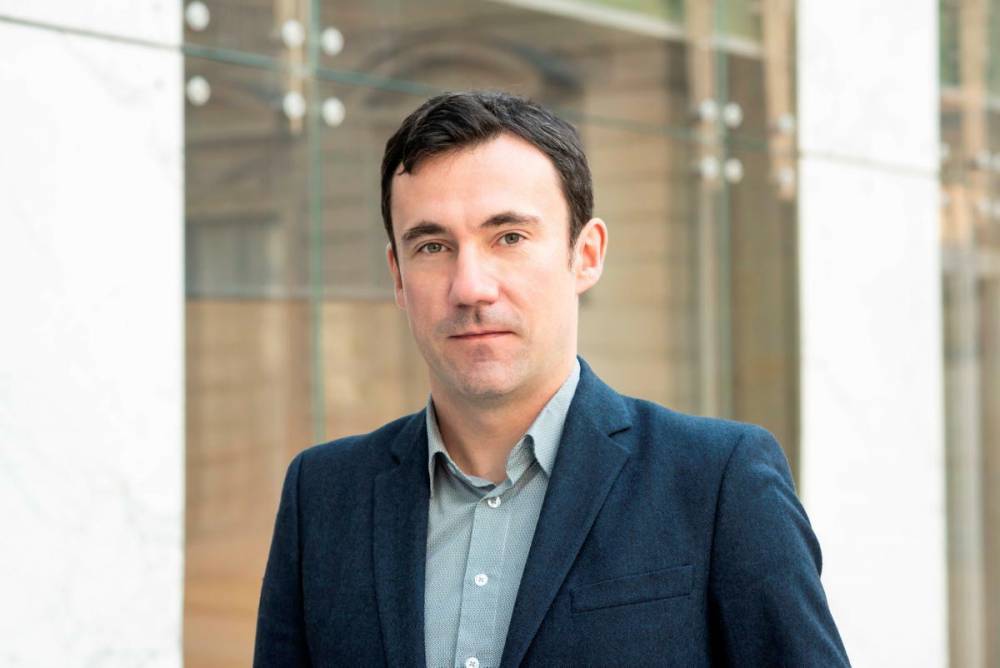
Policy analysis and track 1,5 dialogues on economic security policies, EU-China relations, EU-Japan relations, China’s foreign and security policy, the Taiwan Strait and maritime affairs in East Asia.
Structural shifts in the global semiconductor system
I began by asking about the emergence of a “new economic security consensus” and how it is reshaping the structure of the global semiconductor industry—from pricing mechanisms and competitive dynamics to barriers to entry—and whether this shift signals a deeper fragmentation of the value chain or the persistence of certain forms of globalization.

Mathieu: The “new economic security consensus” is reshaping the semiconductor market from a globalized, price-optimizing system into a geopolitically segmented one. Pricing is increasingly distorted by state subsidies, tax breaks, and strategic procurement rather than pure marginal cost, while competition is shifting from firms to state-backed ecosystems (US, China, and to some extent, increasingly but still insufficiently in my opinion, allied blocs). Barriers to entry are rising not only to capital intensity, but also as a result of a combination of national policies on export controls and technology transfers, and increasingly, on forms of local-content requirements, which privilege national security and resilience over pure market efficiency.
The most likely fragmentation is already occurring in the capital-intensive segments that most directly relate to national security and military power: leading-edge logic, advanced packaging, AI chips, and equipment ecosystems tied to export controls. In contrast, more standardized and cost-driven layers—legacy nodes and some mature analog production—will remain globally integrated for longer, but even these are increasingly under pressure from Chinese capacity expansion and massive state aid, which is already reshaping pricing globally, and put competitor at risks through those induced free-market distortions.
Europe’s strategy and constraints
The discussion then moved to Europe’s positioning, where I asked what concrete changes could be expected from Chips Act 2.0 compared to its initial phase, and what structural bottlenecks continue to limit Europe’s ability to scale from research excellence to industrial production.
Mathieu: “Chips Act 2.0 is likely to shift from funding announcements and R&D support toward more emphasis on shaping demand, through criteria of supply chain resilience and trustworthiness. Compared to the first version, it seems likely that companies should expect stricter eligibility conditions for subsidies, greater linkage between funding and local production commitments, and explicit “European preference” mechanisms in public procurement and infrastructure projects. We should know before the end of the spring, when the European Commission releases the revisions publicly.
The main bottlenecks remain structural: high energy costs, fragmented national industrial policies and a persistent gap between R&D excellence and industrial deployment. Europe’s innovation base is strong, but the conversion into scaled manufacturing is constrained by capital intensity, regulatory complexity, and insufficient demand aggregation at EU level.”
Europe-Taiwan partnership dynamics
I also explored Europe’s external partnerships, focusing on its evolving approach to “strategic indispensability” and asking how cooperation with Taiwan should be prioritized, including where the most meaningful complementarities lie—particularly in the context of France–Taiwan industrial collaboration.
Mathieu: “Europe seems to be moving beyond a sterile debate about an elusive “strategic autonomy” in semiconductors. Europe seeks indispensability through niche strengths and supply chain insertion rather than full-scale duplication of US or Chinese ecosystems. In this context, Taiwan is a critical partner because it anchors the global leading-edge manufacturing system. Europe should prioritize Taiwan in areas where complementarities reinforce mutual resilience: streamlined R&D cooperation, focus on silicon photonics, schemes to facilitate joint investment. Europe should also realize that Taiwan sees TSMC’s investment in Dresden as a test of the European business environment. It is important to focus resources on making Dresden work as it is a strategic project beyond Dresden and Germany.
For France and Taiwan specifically, the most natural complementarities lie in silicon photonics, date center energy efficiency and advanced packaging. The Thales–Foxconn project can already be seen as a matrix for the future of France–Taiwan semiconductor cooperation: its success matters beyond the project itself. For Taiwanese firms, the expansion of data centers in France represents a significant commercial opportunity, while for French companies such as Air Liquide, TSMC’s rapid growth opens up substantial prospects across critical process and materials segments.”
Strategic implications for companies
Finally, I asked about the broader strategic implications for firms, including how these shifts are reshaping decisions on location, supply chains, and partnerships, and what this means in practice for the positioning of France and Taiwan within the global semiconductor ecosystem.
“Companies now face a strategic choice between global efficiency and geopolitical embeddedness. The prevailing model is no longer one of purely cost-driven globalization, but of multi-polar localization: firms will increasingly need to align R&D, manufacturing, talent strategies, and supply chain integration with distinct regional or national ecosystems to secure and maintain market access. This shift elevates political risk management and economic intelligence to core strategic functions within corporate decision-making. In the context of France–Taiwan relations, it implies a clear priority: improving the business environment in France to facilitate the integration and expansion of Taiwanese firms into the broader European industrial ecosystem, currently in a phase of transformation as the EU builds a new European preference framework.”
by Mathieu Duchâtel, Director of International Studies, Institut Montaigne
For more exclusive interviews from our ecosystem and to get the latest insights about Taiwan-France current and future tech cooperation possibilities, check our website: